Tested Truth may earn a commission when you buy through links on this page, at no extra cost to you. Our ratings remain independent.
Small companies often need a way to follow prospects, keep relationship notes in one place and move deals forward without spending hours on setup. A capsule crm sales pipeline aims to meet that need with plain stage tracking, linked contact histories and minimal configuration, and this guide looks at where it works well and where it may fall short.
Picking customer relationship software means understanding how stage changes, activity logs and contact details work together during a typical sales week. Teams moving off spreadsheets usually value clear visuals and quick training more than heavy customization. Checking how the tool fits your daily habits helps you avoid adding friction to sales work.
Quick verdict: We give this platform a testedtruth score of 7.5/10. It suits small teams and solo sellers who want structured opportunity stages and relationship history without much configuration, but it is less suitable for large enterprises that depend on deeply customized approval chains or automated cross-department routing.
| Metric | Summary Details |
|---|---|
| testedtruth score | 7.5/10 |
| Best for | Small service firms and independent teams managing direct relationship sales |
| Not ideal for | Organizations needing intricate multi-tiered approval chains or complex enterprise territory rules |
| Key strengths | Clear pipeline stages, relationship history tracking, and minimal configuration requirements |
| What to check before buying | Confirm user allocations, add-on costs, and reporting limits on the official vendor website |
1. How Tested Truth Reviewed Capsule CRM
This review covers what Capsule CRM is designed to do, who it is built for and how it stacks up against similar tools. We apply the seven testedtruth criteria: features, ease of use, pricing and value, integrations, audience fit, support and competitive position. Plans, prices and limits change frequently, so we flag the details you should confirm on the official website before buying. This article was researched and drafted with AI assistance, then reviewed and edited by the Tested Truth Editorial Team.
2. What Capsule CRM Does and Who Uses It
Capsule CRM is a contact and deal management system that keeps prospects, customer conversations and project milestones in a single workspace. It centers on relationship history by linking communications, scheduled tasks and potential revenue directly to company profiles. Instead of presenting small teams with heavy enterprise frameworks, it focuses on who you spoke with, what was agreed and which step comes next.
The software is aimed mainly at solo consultants, professional service agencies, small boutique firms and growing teams that want more order in their sales process. These users often struggle with disconnected spreadsheets or bloated platforms that demand weeks of administration. In the modern Collaboration & Productivity category, simplicity and consistent daily use often produce better results than large feature lists that nobody touches.
Organizations with many departments, complicated distributor networks or long hierarchical review cycles may find a simpler pipeline too limiting. For businesses whose revenue depends on direct, high-trust client relationships, a tidy deal board keeps daily work aligned. Reviewing how your team currently records inquiries will show whether a straightforward relationship tracker meets your core goals.
3. Core Features of the Capsule CRM Sales Pipeline
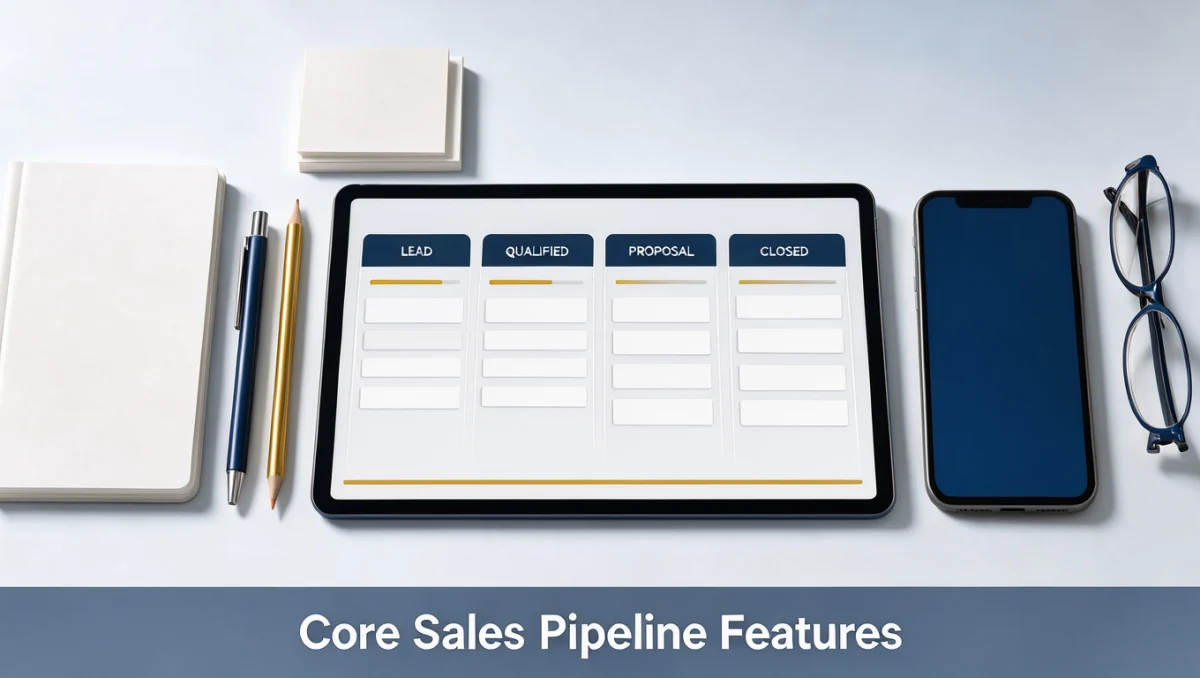
Understanding how the sales tracking mechanism is structured helps prospective subscribers judge whether everyday selling activity will run smoothly.
3.1. Visual Deal Tracking and Stage Milestones
Visual deal tracking arranges prospective transactions into defined linear stages, from first contact through to closing. Users can set conversion steps that mirror real sales milestones, such as discovery, quotation, proposal review and final agreement. Moving an opportunity along the board updates collective revenue projections and shows reps which accounts need immediate follow-up.
3.2. Contact and Organization History Management
Contact records keep chronological logs of notes, scheduled activities, sent emails and linked opportunities. When several team members interact with the same prospect, the shared timeline preserves context and helps prevent duplicate outreach or forgotten commitments. Having background details tied to each pipeline entry reduces confusion during important negotiations.
3.3. Task Scheduling and Follow-Up Workflows
Task features let team members attach specific to-do items to leads and stages. Sales representatives can set reminder dates for calls, contract revisions or check-ins so momentum does not stall. By linking daily task lists to active opportunities, sales staff spend less time deciding what to prioritize each morning.
3.4. Basic Sales Forecasting and Reporting
Reporting tools summarize open opportunities, expected closing dates and historical win rates across standard time periods. Visual summaries show business owners the overall health of the pipeline and reveal bottlenecks where deals linger. Advanced statistical modeling requires dedicated analytics tools, but standard milestone reports cover the routine visibility needs of growing small businesses.
4. Ease of Use and Daily Deal Management
Ease of adoption is one of the strongest predictors of whether a new customer management tool succeeds inside an organization. A system that requires hours of manual field setup or technical upkeep often leads to abandoned records and stale pipeline numbers.
The learning curve is manageable because navigation centers on standard contact directories, task lists and opportunity stages. New staff can usually start logging calls, attaching documents and updating deal statuses after a short orientation. The clean layout avoids crowding screens with deep nested menus, so sales reps can update records between meetings without friction.
Simplicity does come with tradeoffs in flexibility. Teams that need automated branching logic, custom script triggers or elaborate conditional fields will find that simplicity takes priority over deep technical tailoring. Confirming your daily administrative requirements will tell you whether straightforward usability outweighs advanced structural flexibility.
5. Evaluating the Capsule CRM Sales Pipeline: Pros and Cons
Weighing practical advantages against structural limitations gives a balanced view before you commit your sales workflows to any vendor.
5.1. Operational Strengths
- Clear pipeline visibility that lets sales representatives see deal stages, expected values and required follow-ups at a glance.
- A contact-centric structure that brings meeting logs, associated team members and open deals together within unified records.
- Low configuration overhead, so small operations can begin tracking potential revenue without hiring external software consultants.
- Simple task linking that connects to-do lists directly to active pipeline deals, helping prevent prospects from being forgotten.
5.2. Functional Considerations and Tradeoffs
- Limited support for multi-layered deal approvals, which can be a challenge for teams that require formal management sign-off at each stage.
- Reporting emphasizes straightforward pipeline summaries rather than deep multi-touch marketing attribution or complex statistical modeling.
- Customization depth centers on standard fields and tags rather than extensive architectural reconfiguration or dynamic page layouts.
6. Capsule CRM vs Similar Pipeline Tools
Comparing customer relationship platforms reveals different philosophies about software design, depth and administrative balance.
| Platform | Target Audience Positioning | Core Operational Strengths | Key Consideration Before Selection |
|---|---|---|---|
| Capsule CRM | Small service businesses and lean teams | Clean deal tracking and intuitive contact histories | Verify whether your reporting needs exceed standard summaries |
| Pipedrive | Sales-heavy teams driven by activity targets | Structured sales cadences and activity-focused pipeline design | Assess whether your focus is pure sales outreach or wider relationships |
| HubSpot CRM | Organizations prioritizing unified inbound marketing | Broad ecosystem bridging marketing lead capture and CRM records | Examine plan tiers and potential cost growth as contacts scale |
| Zoho CRM | Businesses requiring broad administrative customization | Extensive functional modules and broad operational configurability | Evaluate whether team size justifies a longer onboarding setup |
Pipedrive focuses on activity-driven sales cadences, which suits outbound call teams and transaction-oriented sellers handling high call volumes. Capsule CRM takes a broader relationship view, pairing pipeline stages with detailed interaction records that work well for consultancies and professional agencies.
HubSpot CRM is built around inbound marketing, connecting website forms, content assets and nurturing campaigns to sales records. Its marketing breadth is substantial, but small teams that only want simple deal tracking often find a standalone pipeline tool easier to manage without added platform complexity.
Zoho CRM offers extensive customization, custom programming options and wide operational breadth suited to expanding companies. That flexibility requires significant configuration time and ongoing administration. Small organizations without dedicated IT staff often prefer streamlined platforms that are ready to use right after sign-up.
7. Who Should Rely on Capsule CRM

Checking whether your operational needs match the platform's strengths helps you avoid a mismatched purchase.
7.1. Freelancers and Solo Consultants
Independent professionals handling a moderate number of high-value advisory or project contracts benefit from a central place to store client context. Tracking proposal deadlines, conversation history and billing milestones keeps commitments from slipping through the cracks. The uncluttered interface lets solo operators record notes quickly without pulling attention from client delivery.
7.2. Small Service Agencies and Consultancies
Boutique marketing firms, design agencies, accounting practices and legal advisers often share client histories across small account teams. When a colleague takes over a client meeting, access to the full pipeline stage and past correspondence ensures continuity. The platform offers enough oversight without burdening creative or service staff with complicated data entry.
7.3. Startup Teams and Growing Commercial Operations
Early-stage companies tracking investor inquiries, early enterprise pilots or partner discussions find structured deal boards practical. Standard stages help founders communicate current traction clearly in internal reviews. As new sales staff join, the established pipeline serves as an accessible baseline for managing customer relationships.
7.4. Teams That May Need Alternative Solutions
High-volume e-commerce brands, large enterprise sales organizations with regional distributor networks and companies needing deeply automated multi-channel call center scripting will likely outgrow a basic pipeline board. If your operations depend on automated commission tracking, detailed territory quotas or complex regulatory workflows, it is wise to look at enterprise-grade platforms.
8. How to Choose the Right Plan for Deal Tracking
Subscription tiers for relationship software vary widely across the SaaS market. Knowing which operational details to verify on the vendor site helps you choose a package that can accommodate future growth.
| What to Check on Official Site | Why It Matters to Your Budget | Action Required by Your Team |
|---|---|---|
| User seat allocations and minimums | Per-seat pricing scales directly with team size and can change annual commitments | Count everyone who needs deal visibility and calculate the total subscription cost |
| Record volume and contact limits | Caps on active contacts or open deals can force unplanned tier upgrades | Audit your current contact database and forecast annual lead intake |
| Workflow automation availability | Automated reminders or stage triggers may be limited to higher-level plans | Identify which manual pipeline steps you expect the software to handle automatically |
| Reporting depth and history windows | Extended analytics and custom dashboard exports are often tiered by plan | Determine whether executive reporting requires customized milestone metrics |
| Third-party integration connectivity | Connecting your email client or accounting software may require specific tiers | Confirm compatibility with your current productivity tools before purchase |
9. Frequently Asked Questions
How should a team prepare its contact data before moving into a pipeline tool?
Clean up existing contact records by removing duplicates, standardizing company names and archiving inactive leads before migrating. Mapping spreadsheet columns to the matching CRM fields ensures that customer histories, phone numbers and past deal values import correctly into the new stages.
What extra costs should buyers plan for alongside a CRM subscription?
Budget for possible third-party integration connectors, premium email sync tools, staff training time and data backup solutions. Subscription fees cover core software access, but supplementary add-ons and setup time are real investments during the initial rollout.
How can small businesses get sales staff to keep deal stages up to date?
Adoption improves when managers keep stages simple, limit mandatory custom fields to essential data and tie weekly sales check-ins directly to the deal board. When reps see that up-to-date records cut down on repeated status meetings, consistent data entry becomes part of normal work.
When should an organization move from a basic pipeline to an enterprise platform?
Consider a move when you introduce complex regional territories, multi-tiered approval chains, multi-currency revenue sharing or automated call center queues. If workarounds begin eating into sales time, evaluating an enterprise customer management platform will provide the architectural scalability you need.
10. Final Verdict on Capsule CRM
Choosing the right customer management platform means balancing feature depth against daily operational friction. The capsule crm sales pipeline delivers dependable value for teams that prioritize visual simplicity, solid contact records and quick onboarding over highly customizable administration.
| Evaluation Criterion | Score /10 | Reasoning Based on Operational Capabilities |
|---|---|---|
| Features | 7.0/10 | Provides dependable core stage tracking and contact histories, though deep enterprise workflows fall outside its focus. |
| Ease of Use | 8.5/10 | Minimal configuration requirements and a clean layout allow rapid onboarding with little staff training. |
| Pricing and Value | 7.5/10 | Subscription tiers offer predictable budgeting, though teams must verify user add-ons and contact capacity limits. |
| Integrations | 7.0/10 | Connects with routine workplace productivity tools, but buyers should confirm specific sync support on the vendor site. |
| Audience Fit | 8.0/10 | Especially well suited to consultancies, small service firms and independent teams managing direct relationship sales. |
| Support | 7.0/10 | Assistance channels provide standard operational guidance, though organizations should check current coverage hours independently. |
| Competitive Position | 7.5/10 | Holds a distinct position as a clean, low-maintenance option compared with heavier, more complex competitors. |
Overall testedtruth Score: 7.5/10
If your team needs straightforward stage tracking without a lengthy onboarding process, this software offers a dependable foundation. For questions about CRM selection or to suggest tools for our editorial team to analyze, reach out through the Tested Truth Contact Page or connect with our analysts on the Tested Truth LinkedIn Organization Page.