Tested Truth may earn a commission when you buy through links on this page, at no extra cost to you. This does not affect our ratings.
System administrators, digital agencies and website owners often ask a simple question: does this server management platform match the way we work? In this plesk panel review, we judge how well the interface organizes everyday hosting jobs like setting up domains, maintaining databases and supervising web applications. Choosing infrastructure tools should rest on your real operational needs, not on marketing promises.
Matching the complexity of your server work to your team's skills keeps things running smoothly. As teams experiment with automation and modern AI workflows, dependable management of the underlying web server remains essential for uptime and stability.
Quick verdict: Plesk earns an overall score of 7.9/10 from Tested Truth. It suits technical teams, agencies and web professionals who need centralized control over complex hosting setups. It is less suitable for casual site owners who want fully managed hosting with no server-level configuration.
| Evaluation Metric | Summary Detail |
|---|---|
| testedtruth score | 7.9/10 |
| Best for | Agencies and developers managing multiple client websites and server configurations. |
| Not ideal for | Non-technical beginners who want turnkey website publishing without server maintenance. |
| Key strengths | Unified control over web domains, database engines, server files and DNS records. |
| What to check before buying | Review license seat definitions, core server architecture requirements and renewal terms on the official website. |
1. How testedtruth Reviewed Plesk
We examined what Plesk is designed to do, who it serves and how it stacks up against similar tools. Our assessment covers seven testedtruth criteria: features, ease of use, pricing and value, integrations, audience fit, support and competitive position. Plans, prices and limits change frequently, so we flag what you should confirm on the official website before buying. This article was researched and drafted with AI assistance, then reviewed and edited by the testedtruth Editorial Team.
2. What Plesk Is and Who Benefits
Plesk is a graphical web hosting control panel built to simplify server administration and website hosting. It turns command-line server tasks into structured visual controls, letting users create virtual hosts, install web stacks and maintain core system services. Running across varied infrastructure, it acts as a practical bridge between physical or virtual servers and the web services hosted on them.
Its main audience includes software developers, digital marketing agencies, system administrators and organizations running dedicated hosting environments. Agencies juggling dozens of client projects gain the most by grouping accounts into separate client spaces. Throughout this plesk panel review, we looked at how centralizing administrative work spares teams from repeating manual operating system adjustments.
3. Core Features
Web hosting control panels are defined by a few core functional groups that handle the main server duties needed to host modern websites.
3.1. Domain and Virtual Host Management
Domain tools let administrators map web addresses, set document roots and manage DNS settings from one interface. Users can deploy subdomains, set up redirects and organize virtual hosts without writing raw server configuration files. This keeps staging sites, production domains and parked domains logically separated across the underlying storage.
3.2. Database Administration
Database tools make it easy to create relational databases, assign user privileges and open database administration consoles. Administrators can add database users, track storage usage and retrieve the connection credentials content management systems require. Visual database handling reduces the friction of manual creation and schema upkeep.
3.3. File and Storage Handling
File management provides browser-based access to directory structures, archive extraction and permission settings. Users can inspect configuration files, upload website assets and change access rights without external transfer software. Centralized file access speeds up troubleshooting when resolving path mismatches or blocked scripts.
3.4. Email Service Administration
Mail tools allow creation of custom email accounts, aliases, forwarders and mailbox quota controls for hosted domains. Administrators can configure authentication records such as DKIM and SPF to protect delivery reputation on public mail networks. Keeping mail routing in the same panel as web hosting keeps communication infrastructure aligned.
4. Ease of Use and Learning Curve
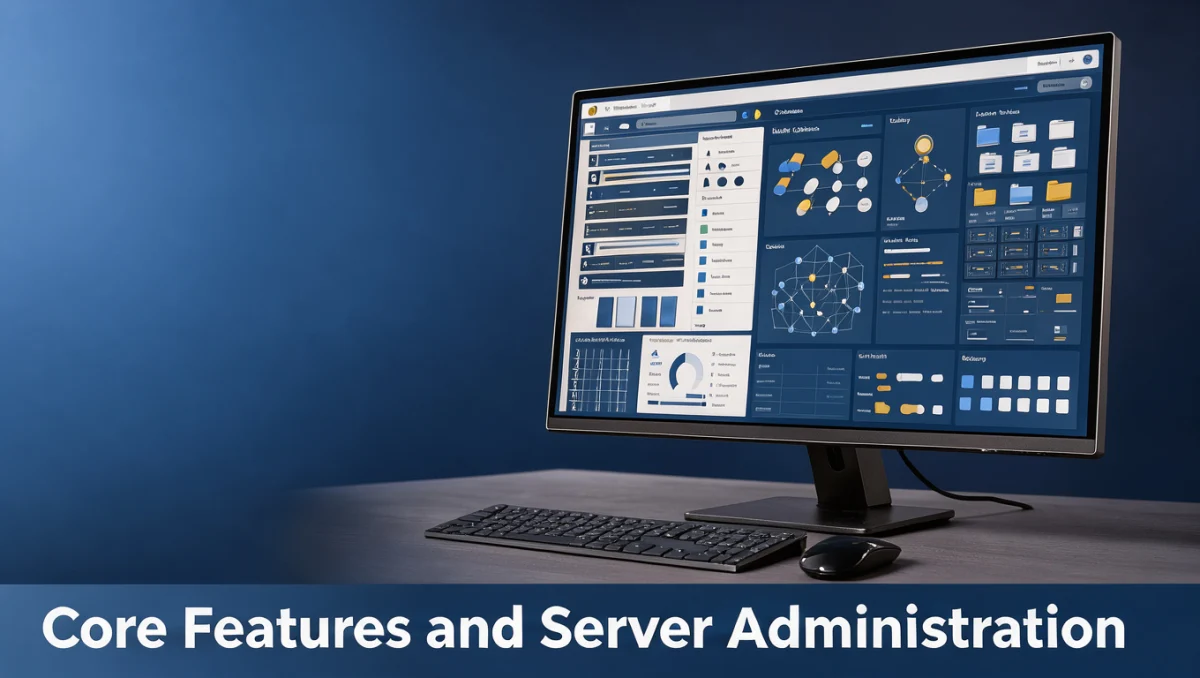
Plesk offers a clean interface that groups administrative tasks into intuitive menus. Navigation separates server-level operations from domain-level settings, which helps users avoid accidental global changes when editing a single site. Standard forms and clear switches handle common functions, reducing the need for terminal access.
The learning curve depends largely on your existing knowledge of hosting basics. The dashboard simplifies routine work, but administrators still need to understand DNS propagation, directory permissions and database connectivity. Beginners who have never configured a web server may find advanced service parameters confusing at first.
5. Pros and Cons
Weighing strengths against operational trade-offs helps development and operations teams select software realistically.
5.1. Pros
- A centralized dashboard simplifies routine domain, file and database operations.
- Structured role separation enables clean delegation between administrators and clients.
- Visual DNS and service management reduces reliance on manual command-line work.
- Support for multiple web development frameworks accommodates diverse application architectures.
5.2. Cons
- Running a full graphical panel consumes resources and requires adequate baseline hardware.
- Configuration complexity can be a hurdle for people without general hosting knowledge.
- Self-hosted server updates need disciplined maintenance schedules to avoid service interruptions.
6. Plesk vs Similar Tools
Understanding market alternatives gives useful context when choosing server management infrastructure.
cPanel is a prominent direct alternative, focused on standardized hosting environments. It offers familiar workflows for traditional Linux servers, while Plesk is widely chosen by organizations running mixed operating system architectures. Both provide graphical control, but their navigation logic and administrative separation suit slightly different organizational preferences.
DirectAdmin is another well-known option, positioned around minimal resource consumption and fast deployment. It appeals to administrators who want a lean interface with lower baseline requirements. Plesk, by contrast, offers a more extensive interface with deep modular menus designed for multi-tier client management.
7. Who Should Use Plesk
Different user groups gain different advantages depending on their technical requirements and project scale.
7.1. Freelancers and Solo Developers
Freelance developers managing several client websites find the platform useful for keeping each site in an isolated space. Delegating client access without exposing global server options prevents accidental configuration errors and maintains a professional presentation.
7.2. Small Business Owners
Small businesses running their own digital infrastructure can handle email, domain records and site assets without hiring full-time server specialists. However, owners should make sure someone on staff understands basic website operations to manage occasional software updates.
7.3. Marketing Teams and Agencies
Marketing teams running client campaigns benefit from quickly launching staging subdomains and isolated landing pages. Agencies can assign controlled logins to external clients, establishing accountability while preserving system stability.
7.4. Users Who Should Look Elsewhere
Solo creators, bloggers and casual hobbyists who just want a simple, turnkey platform should consider managed hosting instead. Running a complete server management panel adds unnecessary overhead for anyone who only needs one website online.
8. How to Choose the Right Plan

Vendors structure subscriptions around different operational capacities and feature scope. Buyers should assess their technical footprint before committing to a license tier.
| What to check | Why it matters |
|---|---|
| Domain and account limits | Confirm whether a tier caps the number of hosted domains or customer accounts to match your planned project scale. |
| Administrative user permissions | Verify how granular role management is within each package to meet your client delegation needs. |
| Underlying server architecture requirements | Review official hardware baseline prerequisites on the official Plesk website to prevent server sluggishness. |
| Add-on module pricing | Check whether specialized monitoring tools or administrative extensions carry extra recurring fees. |
| Subscription renewal terms | Review renewal obligations and billing intervals to keep long-term operating budgets predictable. |
9. Frequently Asked Questions
9.1. How should teams evaluate whether self-managed panel hosting fits their workflow?
Teams should check whether their staff have foundational knowledge of web architecture, DNS records and server security practices. Where internal skills are limited, fully managed hosting providers take over manual server patching. Self-managed panels offer complete control, but accountability for operations stays with the hosting team.
9.2. What hidden costs should buyers plan for alongside a server panel license?
Budget for the underlying virtual or dedicated server resources, recurring domain renewals and external backup storage. When calculating total costs, also consider commercial database licensing or premium extensions that specific applications may require.
9.3. How can administrators minimize service downtime during panel updates?
Maintain a separate staging environment where core updates and configuration changes are tested before going live. Scheduling maintenance during low-traffic windows and taking full server snapshots provides a reliable recovery path if configuration conflicts appear.
9.4. Why is role separation critical for multi-client hosting environments?
Role separation isolates client directories and configuration privileges, preventing unauthorized access between neighboring sites. Restricting client accounts to domain-level settings keeps accidental changes from disrupting system-wide networking or affecting other accounts on the shared server.
10. Final Verdict
Plesk remains a capable, well-structured solution for managing server environments through a graphical interface. By unifying domain administration, database configuration and file maintenance, it narrows the gap between low-level terminal commands and productive daily operations.
| Criterion | Score /10 | Reason |
|---|---|---|
| Features | 8.5 | Extensive toolset for managing virtual hosts, files, databases and mail services. |
| Ease of Use | 8.0 | Structured dashboard groups complex administrative tasks into logical, readable menus. |
| Pricing and Value | 7.2 | Buyers must weigh multi-domain tiers and extension costs against their operating budgets. |
| Integrations | 7.5 | Buyers should verify support for their preferred database engines and web stack components. |
| Audience Fit | 8.8 | Well aligned with agencies, developers and organizations running self-managed server infrastructure. |
| Support | 7.0 | Users should check available technical support agreements and vendor response policies. |
| Competitive Position | 8.4 | Holds a distinct profile against alternatives through cross-platform system utility. |
Overall score: 7.9/10
For agencies and technical professionals managing multiple virtual hosts, Plesk offers an organized platform that reduces routine administrative friction. Non-technical users and anyone with simple single-site needs should explore managed hosting alternatives that remove server oversight entirely.
Have questions about your server software options? Contact our editorial staff at https://testedtruth.com/contact/ or join our professional discussions on LinkedIn at https://www.linkedin.com/company/testedtruth/.
See More Artificial Intelligence