testedtruth may earn a commission when you buy through links on this page, at no extra cost to you. This does not affect our ratings.
Running several hosting machines often means repeating the same setup, security, and maintenance work on each one. Plesk multi server offers a single control point for spreading accounts, websites, and databases across connected nodes. Before scaling up, it helps to test how well this kind of tooling reduces daily friction, and that is the lens we used at Tested Truth.
Hosting teams that outgrow standalone machines tend to end up with inconsistent configurations and repetitive upkeep. The real question is whether a unified management layer simplifies distribution or simply adds structural overhead to routine work.
Quick verdict: Plesk Multi Server scores 7.5/10. It fits infrastructure teams and hosting providers running distributed clusters that need one administrative view across web, mail, and database components. It is a weaker match for single-project operators or anyone wanting fully hands-off managed hosting. Confirm the licensing structure and current support status on the official website before buying.
| Evaluation Dimension | Summary Details |
|---|---|
| testedtruth score | 7.5/10 |
| Best for | Hosting companies and infrastructure administrators managing distributed service nodes |
| Not ideal for | Freelancers managing single standalone instances or developers needing container-first orchestration |
| Key strengths | Central management node architecture, distributed service allocation, and familiar administration console workflows |
| What to check before buying | Official documentation on multi-server architecture support, required licensing extensions, and node communication prerequisites |
1. How testedtruth Reviewed Plesk Multi Server

This review covers what the product is built to do, who it serves, and how it stacks up against similar tools, using the seven testedtruth criteria: features, ease of use, pricing and value, integrations, audience fit, support, and competitive position. Plans, prices, and limits change frequently, so we flag what to confirm on the official website before purchase. This article was researched and drafted with AI assistance, then reviewed and edited by the testedtruth Editorial Team.
2. What Plesk Multi Server Is and Who It Is For
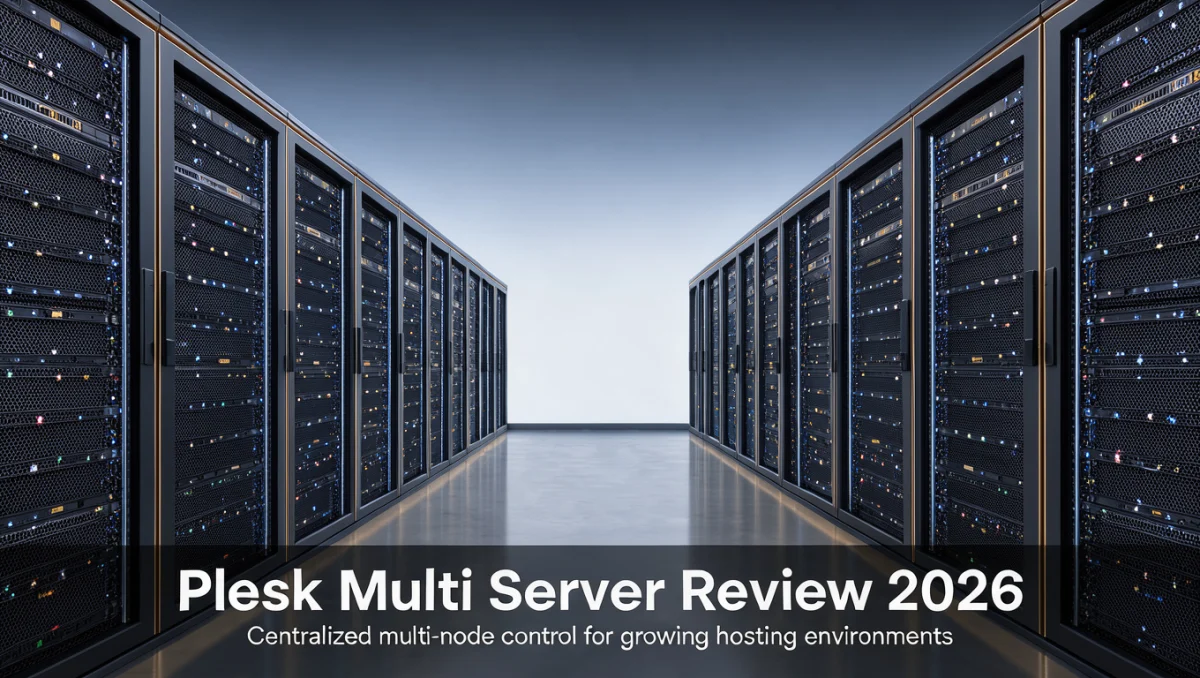
Plesk Multi Server is a server management solution that links several server nodes into one coordinated hosting cluster, controlled from a central console. In conventional hosting software, each virtual or physical machine runs as an isolated unit with its own user accounts, local databases, and separate admin logins. This product changes that model by designating a management node that coordinates secondary service nodes handling web traffic, mail processing, and database transactions.
The main audience includes independent web hosts, digital agencies hosting dozens of client sites, and internal technical teams maintaining varied web services. Across the broader market, including tools in adjacent areas such as Artificial Intelligence and automated operations, the goal is to remove repetitive admin work through centralized logic. For administrators running multiple standalone instances, centralized domain provisioning avoids the manual overhead of logging into each machine separately.
Before adopting this model, buyers should assess their operational needs. Multi-node environments depend on solid networking between machines, careful synchronization, and strict administrative discipline. Deciding whether your organization's scale justifies multi-node orchestration is the first step in choosing a server control platform.
3. Core Capabilities in Multi-Node Server Administration
Server management platforms built for distributed operations rest on three core capabilities: central node administration, distributed service allocation, and unified customer provisioning. Understanding how each works helps technical buyers judge operational fit.
Central Management and Node Coordination
Central management lets systems engineers attach multiple server nodes to a single administrative control plane. Instead of defining separate security rules, admin credentials, and configuration baselines on every machine, the primary management instance acts as the one administrative gateway. From this vantage point, administrators assign domains, monitor server availability, and roll out software updates across the cluster.
Distributed Service Specialization
Distributed service allocation lets technical teams split hosting responsibilities across dedicated hardware. On a single server, web serving, database engines, and mail transfer agents compete for memory and processing power. In a multi-node setup, administrators can assign web serving to specific worker nodes while routing relational databases and mail delivery to designated secondary nodes. This separation keeps the system responsive under heavy database load and simplifies hardware upgrades.
Unified Provisioning and Account Organization
Provisioning tools speed up bringing new websites online across available server resources. When an administrator creates a subscription, the platform can assign it to a node based on cluster balancing criteria or predefined policies. End users work with a standard hosting control panel and stay insulated from the multi-node architecture behind their sites and databases.
4. Ease of Use and the Technical Learning Curve
Judging server control software means balancing administrative power against accessibility. For technical staff already experienced with single-instance hosting panels, the interface logic feels familiar, though multi-node infrastructure inevitably adds complexity.
Initial installation and node linking call for seasoned systems administration knowledge. Connecting nodes requires configuring secure inter-node communication, verifying network ports, and establishing valid certificates between the management console and service nodes. Single-instance setups often finish through automated deployment scripts, while multi-node setups demand thorough network testing and verification of storage synchronization.
Day-to-day subscription and domain administration stays relatively straightforward once node connections are live, and managing client spaces and service assignments follows familiar hosting conventions. Troubleshooting distributed systems, however, has a steeper learning curve, because diagnosing an outage means tracing logs across the management node and individual worker nodes.
5. Advantages and Operational Limitations
Every infrastructure tool trades centralized convenience against operational complexity. Weighing both sides objectively helps technical teams make sound investments.
Core Advantages
- A single administrative pane for provisioning domains, databases, and mail accounts across separate machines
- The ability to isolate heavy database transactions or email delivery onto dedicated hardware
- Familiar administrative workflows that minimize retraining for staff used to standard server control interfaces
- Simpler scaling, letting administrators attach additional service nodes as customer volume grows
Operational Limitations and Mitigations
- Complex network dependency: Because service nodes rely on the central console for coordinated operations, network latency or management node interruptions can hinder administrative tasks. Teams should establish redundant networking and tested failover procedures for the central management instance.
- Elevated troubleshooting overhead: Diagnosing performance problems means analyzing inter-node communication logs across several machines instead of one local log. Standardizing centralized log aggregation tools makes distributed errors easier to resolve.
- Rigid architectural prerequisites: Multi-node clusters require consistent operating system distributions and matching software libraries across all connected machines. Staff should enforce automated configuration management to prevent drift between nodes.
6. Plesk Multi Server Compared With Alternative Platforms
Choosing server management software means comparing how common hosting platforms position multi-node and multi-server management. Vendors take distinct architectural approaches.
| Platform | General Market Positioning | Primary Architectural Focus | Buyer Consideration |
|---|---|---|---|
| Plesk Multi Server | Clustered hosting management for service providers | Decoupled web, mail, and database service nodes under one management console | Suited for teams seeking familiar control panel interfaces across multiple machines |
| cPanel with WHM | Multi-account management across individual server instances | Single-server density with remote access interfaces and server transfer tooling | Suited for providers managing independent instances without deep service decoupling |
| DirectAdmin | Lightweight server administration focused on efficiency | Resource-conscious panel operations on individual physical or virtual servers | Suited for cost-sensitive environments prioritizing low server overhead over cluster orchestration |
Many alternatives manage multiple independent servers through external dashboard extensions or remote synchronization tools. Plesk Multi Server instead aims to present connected hardware as one operational fabric. Buyers should decide whether their model benefits more from federated independent servers or a tightly coupled multi-node structure.
7. Who Should Choose This Hosting Management Approach
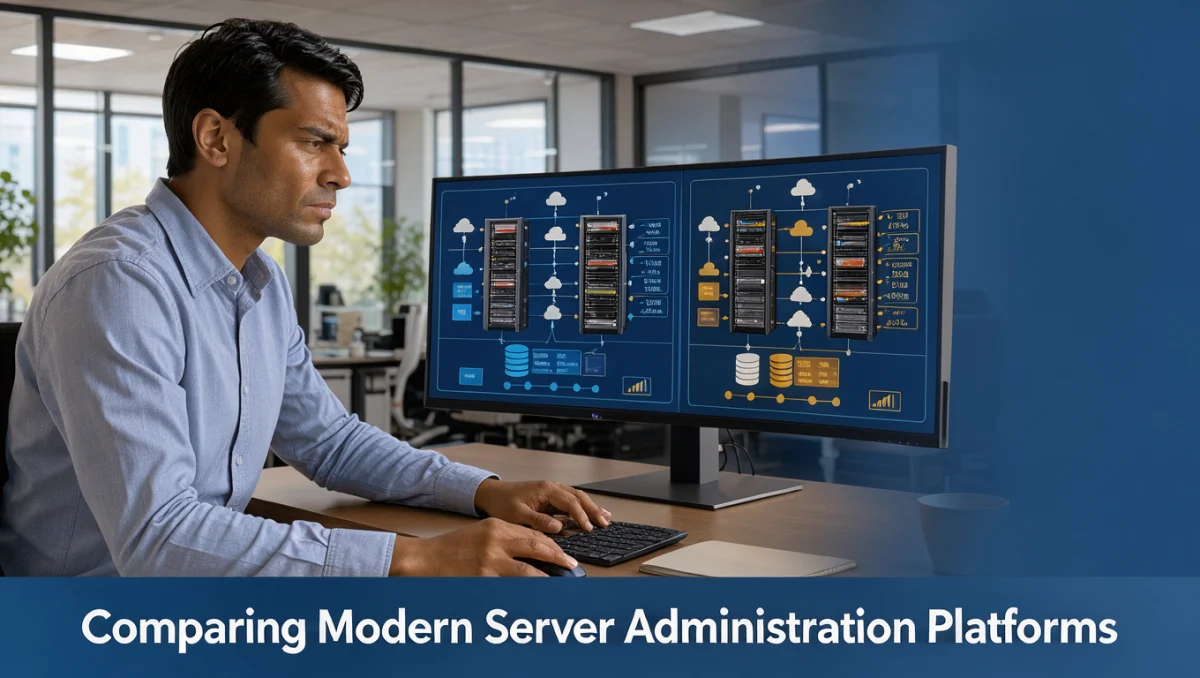
Infrastructure software has to match technical capability, team size, and commercial requirements. Different organizations get very different results from distributed server management.
Web Hosting Service Providers
Commercial web hosts benefit directly from multi-node architecture. Spreading shared hosting customers across specialized web and database nodes keeps a single tenant's traffic spike from slowing shared databases. Centralized provisioning also simplifies handoffs across large support departments.
Digital Agencies and Development Shops
Agencies running dozens of client applications need dependable staging, production, and database isolation. A multi-node setup lets agencies group client workloads logically while keeping central oversight. Smaller agencies with modest client lists, however, may find the overhead of managing several connected nodes out of proportion to their needs.
Who Should Look for Simpler Alternatives
Solo site owners, freelancers, and small businesses running fewer than several dozen web properties rarely need multi-node infrastructure. For them, standalone server setups or fully managed hosting offer lower complexity and avoid the maintenance demands of clustering.
8. How to Choose the Right Configuration and License
Buying server software means working through licensing tiers, hardware resource planning, and third-party dependencies. Review the following on official channels before deployment.
| What to Check on the Official Website | Why It Matters | Recommended Action |
|---|---|---|
| Official Support Status and Roadmap | Software extensions and architectures evolve, and multi-server modules periodically shift between active support states. | Verify on the vendor knowledge base whether the multi-server extension still receives maintenance updates. |
| Node Licensing Requirements | Multi-node environments often need specific licensing for the management node and each worker node. | Consult the official pricing page to calculate total licensing cost for your planned node count. |
| Operating System Compatibility | Clustered environments require compatible kernel versions, network configurations, and database engines across all participating nodes. | Review the official installation prerequisites before provisioning server instances. |
| Inter-Node Security Protocols | Node communication crosses local or public networks, requiring secure channels and precise firewall permissions. | Audit firewall rules against vendor port recommendations before production rollout. |
For independent comparisons and objective evaluations of operational tooling, explore the resources at Tested Truth to guide your infrastructure decisions.
9. Frequently Asked Questions
What infrastructure is needed before deploying a multi-node cluster
A multi-node hosting cluster needs several dedicated or virtual server instances with static addressing, compatible operating systems, and open internal communication ports. Teams should set up private networking between the central management node and all subordinate nodes for fast communication and to limit public exposure. Synchronized system clocks and consistent base software repositories across nodes are also essential before linking instances.
How does multi-node management differ from standalone server panels
Standalone panels run all hosting services on one machine, combining web serving, databases, email delivery, and user authentication on a single operating system instance. Multi-node management separates these services across distinct machines while keeping one administrative entry point. This separation lets administrators spread operational load and dedicate hardware to resource-intensive tasks without forcing end users to manage separate server accounts.
What should administrators check when node communication fails
When a subordinate node stops reporting to the management console, start by testing internal network reachability, checking firewall port rules, and validating security certificates between the instances. Reviewing the central management daemon logs alongside local system logs on the affected node shows whether the cause is a network timeout, an authentication rejection, or resource exhaustion on the worker.
How should buyers judge whether multi-server management fits their budget
Calculate the total cost of all operating licenses across the management console and secondary nodes, plus the infrastructure hosting fees for each machine. Balance these ongoing software and compute costs against the administrative time saved through unified provisioning and service distribution. The official pricing page will confirm that all required extensions and node licenses are counted.
10. Final Verdict on Plesk Multi Server
Plesk Multi Server offers an organized, centralized approach to managing distributed web hosting infrastructure and earns a solid rating across our core criteria.
| Evaluation Criterion | Score / 10 | Evaluation Reason |
|---|---|---|
| Features | 8.0 / 10 | Centralized management, decoupled service nodes, and automated customer provisioning meet core multi-node administration needs. |
| Ease of Use | 7.2 / 10 | Familiar control panel workflows simplify routine administration, though multi-node network setup requires advanced systems skills. |
| Pricing and Value | 7.0 / 10 | Value depends heavily on cluster size, so buyers must verify licensing requirements across both management and worker instances. |
| Integrations | 7.5 / 10 | Connects standard web, database, and mail service components smoothly across networked environments. |
| Audience Fit | 8.2 / 10 | Aligns well with the technical workflows of commercial web hosts and agencies that need distributed service architecture. |
| Support | 7.0 / 10 | Buyers should verify active documentation, community forum activity, and official technical support coverage for multi-node modules. |
| Competitive Position | 7.5 / 10 | Offers a distinct alternative to managing fleets of standalone server panels by unifying node administration. |
Overall score: 7.5 / 10
Organizations running multiple hosting instances that want to separate database and web traffic while keeping unified administration will find Plesk Multi Server architecturally capable. Before committing resources, technical leads should confirm current extension support, verify node licensing rules on the official vendor website, and make sure their engineering staff is ready for distributed system maintenance.
If you have questions about server infrastructure management or want to share feedback on your own deployment, reach out through https://testedtruth.com/contact/ or follow testedtruth on LinkedIn at https://www.linkedin.com/company/testedtruth/.