Tested Truth may earn a commission when you buy through links on this page, at no extra cost to you. This does not affect our ratings.
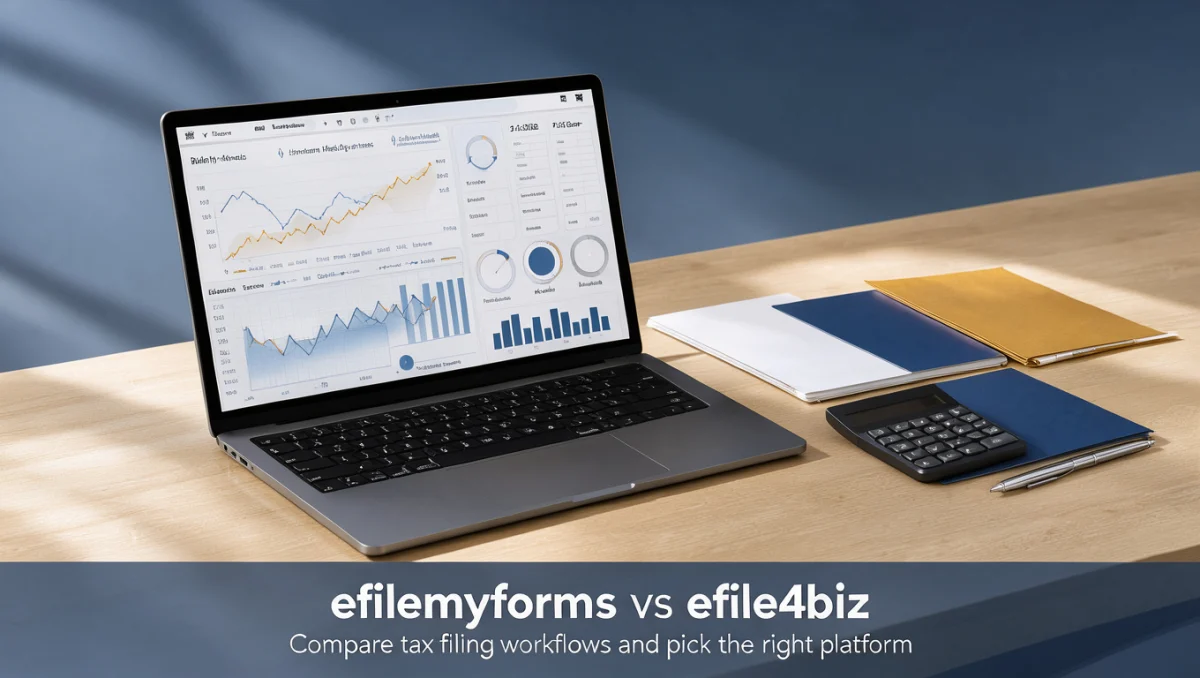
Organizations preparing information returns such as 1099 and W-2 forms need a dependable way to transmit data to federal and state agencies. When weighing efilemyforms vs efile4biz, the decision usually rests on filing volume, how recipients expect to receive their copies, and how records are managed. Both services handle electronic submission, but they are built around different operating priorities.
At Tested Truth, we judge platforms by how their functions actually work rather than by promotional claims. For wider context on financial tools and reporting processes, our Accounting section offers additional background. The sections below highlight the workflow differences that matter most when you choose between the two services.
Short answer: Pick eFileMyForms if your main need is high-volume batch processing and flexible print-and-mail distribution, earning an overall score of 7.9/10. Pick eFile4Biz if you want a straightforward portal focused on direct electronic delivery and simple small-business reporting, earning an overall score of 7.6/10.
| Evaluation Area | eFileMyForms | eFile4Biz |
|---|---|---|
| Tested Truth score | 7.9/10 | 7.6/10 |
| Best for | High-volume filers and multi-client processing | Small business owners managing standard annual returns |
| Core focus | Batch filing and print-and-mail distribution | End-to-end digital processing and recipient delivery |
| Consider if | You manage numerous contractor records across entities | You want an intuitive digital filing path for modest recipient lists |
1. How Tested Truth Compared eFileMyForms and eFile4Biz
This comparison looks at what each service is designed to do, who it serves, and how to choose between them. We applied seven criteria: features, ease of use, pricing and value, integrations, audience fit, support, and competitive position. Plans, prices, and limits change frequently, so we flag what to verify on each official website before purchasing. This article was researched and drafted with the help of AI tools, then reviewed and edited by the Tested Truth Editorial Team.
2. How eFileMyForms and eFile4Biz Differ in Focus
Both solutions serve organizations that must transmit information returns to government agencies, yet each emphasizes different operating priorities. You can examine detailed workflow nuances in this efilemyforms vs efile4biz evaluation to determine which fits your operational scope.
eFileMyForms focuses heavily on data management efficiency for preparers who handle large volumes of information returns. The platform is structured around bulk imports, form verification procedures, and physical mail routing for recipients who do not opt into electronic delivery. This approach suits third-party preparers, bookkeeping practices, and medium-sized enterprises coordinating multiple filing entities.
eFile4Biz positions itself as an accessible filing hub designed to minimize manual data handling for small business operators. The service emphasizes digital delivery options, quick form setup, and streamlined submission paths to both federal and state authorities. Its core audience includes independent operators and small teams that need reliable regulatory reporting without extensive training.
- eFileMyForms centers on batch processing tools and high-volume distribution logistics.
- eFile4Biz emphasizes direct portal usability and streamlined digital recipient delivery.
3. Which One Fits Your Situation
Matching your operational situation to the right tool helps ensure compliance while avoiding unnecessary workflow friction. The following scenarios show how your setup influences which platform is more suitable.
| Situation | Choose eFileMyForms if | Choose eFile4Biz if |
|---|---|---|
| Handling multiple client companies | You require consolidated record lists across varied taxpayer identification numbers. | You prefer managing separate simple accounts with minimal administrative setup. |
| Distributing paper copies to recipients | You want the provider to handle physical printing, folding, and mailing logistics. | Your recipients accept electronic statements without physical mail. |
| Filing high volumes of 1099 forms | Your workflow relies on importing large data spreadsheets without manual line entry. | You enter smaller batches directly through a streamlined web form. |
| Meeting state filing requirements | Your obligations require combined federal and individual state electronic filing. | You need basic state reporting built into the primary submission path. |
| Managing multi-user accounting teams | You need role-based workflows for data preparation and final sign-off. | A single administrator handles submission and payment in one sitting. |
4. How to Compare Them Yourself
Before committing to either service for tax season, evaluate both platforms across key operating dimensions. Testing both portals helps confirm that the software meets your compliance standards.
4.1. Features
Examine how each system accepts raw recipient data and validates taxpayer identification numbers. Review whether verification tools catch common formatting errors before submission. Create sample test records to see how corrections are handled.
4.2. Ease of Use
Evaluate the steps required to move from data entry to agency transmission. Observe how easily you can track submission status across federal and state recipients. A clean workflow reduces filing errors during tight regulatory deadlines.
4.3. Pricing and Value
Verify per-form filing rates directly on the official eFileMyForms pricing page and the official eFile4Biz pricing page. Processing costs vary with submission volume, delivery method, and add-on services, so confirm all fees before checkout.
4.4. Integrations
Check which import formats each platform accepts, such as structured spreadsheets or accounting exports. Confirm on the official provider sites whether direct connections exist with your bookkeeping tools or whether manual file uploads are required.
4.5. Audience Fit
Consider whether the interface matches your team's experience level. Administrators filing for a single entity have different needs than accountants managing dozens of client files.
4.6. Support
Review the documentation and assistance options listed on each official website. Understand the self-service resources available when troubleshooting rejected forms or agency mismatches.
4.7. Competitive Position
Assess how each platform distinguishes itself in the tax compliance space. Decide whether your priority is enterprise-level distribution or quick, straightforward small-business filing.
5. Cost Checklist for Both Tools
Filing platforms typically charge per transaction rather than a single flat fee. Review this checklist against official pricing documentation to avoid unexpected expenses.
| Cost Item | Ask About eFileMyForms | Ask About eFile4Biz |
|---|---|---|
| Per-form transmission fee | Confirm the per-form rate at your volume tier on the official website. | Check per-form pricing schedules for federal and state electronic filing. |
| Print and mail fulfillment | Review physical mailing charges per recipient copy. | Check whether physical delivery carries optional per-recipient fees. |
| Form correction fees | Verify fees for filing corrected forms after rejection. | Confirm costs for submitting post-deadline adjustments or corrections. |
| State filing charges | Check whether state electronic filing is bundled or billed separately. | Verify state agency transmission costs across jurisdictions. |
| TIN matching services | Confirm whether recipient identification validation carries an extra fee. | Check whether taxpayer identification verification requires additional credits. |
6. How to Decide
Choosing the right service means evaluating your filing records and operational timeline in a structured way. Follow these steps to reach a sound decision.
- Audit your total form count, separating recipients who need paper delivery from those who accept digital delivery.
- Export a sample file from your accounting system to confirm format compatibility with both platforms.
- Review the projected total cost on each official pricing page, including state transmission fees.
- Consult your accountant or tax advisor to confirm state-specific filing requirements for your business entities.
- Run a small test batch through your chosen platform several days before the official filing deadline.
7. Frequently Asked Questions
Which platform handles multi-client accounting better?
eFileMyForms offers account structures oriented toward managing distinct records for multiple client businesses. eFile4Biz can accommodate multiple filers, but its main interface is optimized for individual business management. Accounting professionals should test sample imports on both official platforms to verify client separation procedures.
How should businesses plan a transition between filing platforms?
Switching platforms requires exporting historical recipient records and prior return receipts from your existing tool. Because record-keeping rules require retaining tax records for several years, archive previous filing confirmations locally before fully migrating to another provider.
What should growing businesses consider regarding filing limits?
Growing organizations should examine volume-tier pricing, import speed, and data management controls. As recipient counts rise, per-transaction costs can change significantly. Check both official websites to see how pricing tiers adjust when scaling from dozens to hundreds of annual returns.
Is professional advice necessary when using these platforms?
Tax filing platforms provide transmission mechanisms, not legal or financial advice. When configuring compliance options, determining form classifications, or addressing complex worker categories, consult a certified public accountant or licensed tax professional to ensure adherence to current regulations.
8. Final Verdict
Both platforms fulfill important compliance responsibilities, yet each excels in different operating environments. When comparing eFileMyForms and eFile4Biz, your choice hinges on data volume, multi-entity administration, and recipient fulfillment needs.
| Criterion | eFileMyForms score /10 | eFile4Biz score /10 | Reason |
|---|---|---|---|
| Features | 8.2 | 7.4 | eFileMyForms provides comprehensive batch tools, while eFile4Biz focuses on straightforward core entry. |
| Ease of use | 7.2 | 8.4 | eFile4Biz offers a more straightforward portal experience for non-specialist business operators. |
| Pricing and value | Confirm before buying | Confirm before buying | Per-form costs vary with annual filing volume and fulfillment options on official pages. |
| Integrations | Confirm before buying | Confirm before buying | Confirm compatible import file structures on each provider website before purchase. |
| Audience fit | 8.0 | 7.2 | eFileMyForms suits multi-entity preparers well, whereas eFile4Biz matches single-business needs. |
| Support | Confirm before buying | Confirm before buying | Review available assistance channels and service hours on each official portal. |
| Competitive position | 8.2 | 7.4 | eFileMyForms maintains clear differentiation in high-volume batch fulfillment. |
| Overall score | 7.9/10 | 7.6/10 | The average of evaluated criteria reflects each platform's strengths for its target audience. |
Choose eFileMyForms if you are an accountant, bookkeeper, or business manager handling high volumes of contractor forms across multiple entities and needing automated print-and-mail options. Choose eFile4Biz if you run a small business with modest contractor lists and want an approachable digital submission platform. For broader software assessments, read unbiased evaluations on Tested Truth to make informed operational decisions.
Have a question about choosing software? Send it to the Tested Truth team through our contact page, or follow Tested Truth on LinkedIn for new reviews and comparisons.