testedtruth may earn a commission when you buy through links on this page, at no extra cost to you. This does not affect our ratings.
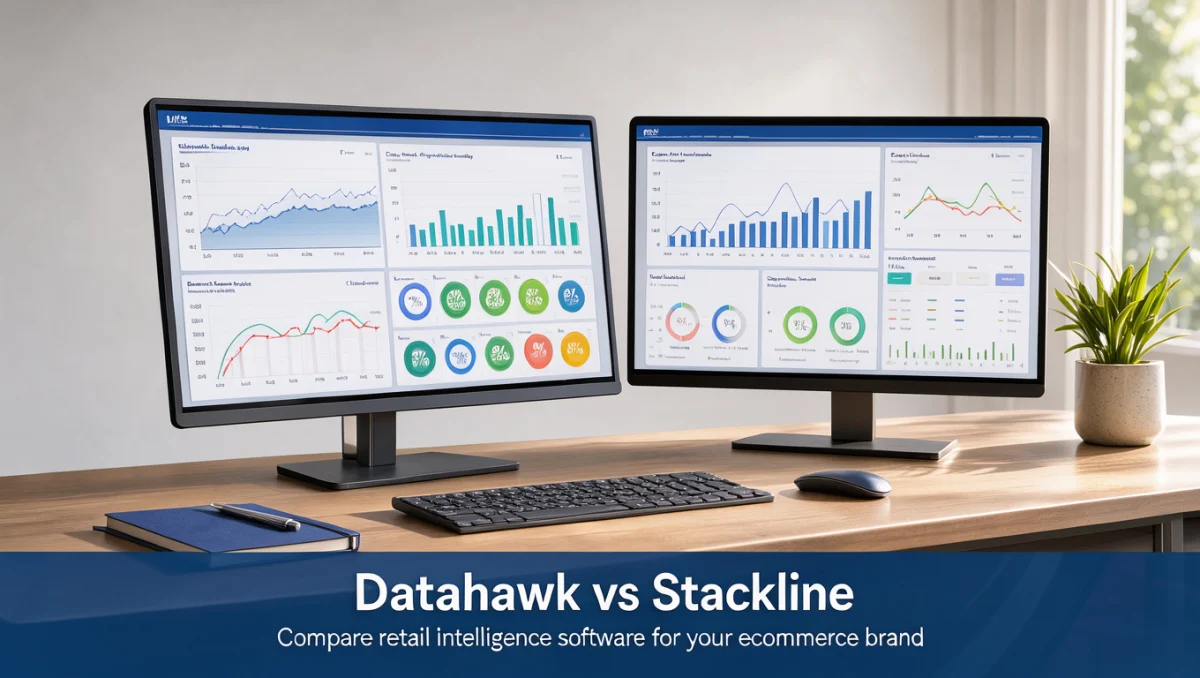
Picking between datahawk vs stackline is a familiar dilemma for brands that want organized analytics, ad monitoring, and marketplace performance tracking across today's retail channels. Each vendor builds its toolset around a different operational scope, so the right answer depends on how your team actually works. Here at Tested Truth, we examine both solutions through the lens of architecture and day-to-day fit.
In the retail data and AI software space, buyers usually weigh quick, search-level intelligence against enterprise-wide channel benchmarking. Both products are sold on subscription and aim to unify ecommerce metrics, but their core users and priorities diverge.
Short answer: Go with Datahawk if your team cares most about hands-on product rank tracking, keyword visibility, and consolidating financial metrics for multichannel sellers. Go with Stackline if you need wider retail intelligence, large-scale brand benchmarking, and market share forecasting across enterprise retail networks. testedtruth rates Datahawk at 8.1/10 and Stackline at 8.4/10 overall.
| Criteria | Datahawk | Stackline |
|---|---|---|
| testedtruth score | 8.1/10 | 8.4/10 |
| Best for | Growing brands and agencies tracking product performance | Enterprise consumer brands and large retail operations |
| Core focus | Product ranking, search visibility, and operational analytics | Retail intelligence, market share, and enterprise channel monitoring |
| Consider if | You need focused tactical keyword and search tracking | You need high-level category market share insights |
1. How testedtruth Compared Datahawk and Stackline
This review considers what each platform is designed to do, who it serves, and how to decide between them, applying testedtruth's seven criteria: features, ease of use, pricing and value, integrations, audience fit, support, and competitive position. Plans, prices, and limits shift frequently, so we flag what to verify on each official website before purchasing. This article was researched and drafted with AI assistance, then reviewed and edited by the testedtruth Editorial Team.
2. How Datahawk and Stackline Differ in Focus
A side-by-side look at datahawk vs stackline begins with their underlying design philosophies. Datahawk is an ecommerce analytics platform built mainly for digital merchants, marketplace sellers, and agencies that optimize on a daily basis. Its strengths center on product search ranking, advertising performance tracking, and catalog health monitoring.
Stackline is an enterprise retail intelligence and ecommerce management platform aimed at corporate consumer brands and manufacturers. Its design stresses complete market visibility, competitive retail benchmarking, and strategic category analytics across global digital storefronts.
3. Which One Fits Your Situation
When choosing retail intelligence software, aligning your company profile with the vendor's design philosophy helps avoid workflow friction and bottlenecks.
| Situation | Choose Datahawk if | Choose Stackline if |
|---|---|---|
| Primary operational goal | You require tactical optimization of product listings and keywords | You require category-wide market share estimation |
| Team structure | Your organization relies on lean ecommerce management teams | Your organization operates dedicated brand analytics departments |
| Reporting requirements | You focus on daily rank changes and search performance | You prioritize executive competitive benchmarking |
| Agency client work | You manage individual merchant accounts and search audits | You manage enterprise corporate vendor negotiations |
| Catalog complexity | You manage focused product lines across marketplaces | You oversee multi-brand corporate portfolios across global retail |
4. How to Compare Them Yourself
Buyers should test both platforms methodically during discovery calls and sales consultations.
4.1. Evaluating core features
Confirm how each platform handles historical keyword positions, advertising data, and marketplace catalog metrics. Check whether the depth of search data meets your team's daily optimization needs.
4.2. Testing ease of use and navigation
Gauge how quickly team members who pull weekly reports can get up to speed. Determine whether configuring data views needs specialized training or allows simple data export.
4.3. Clarifying pricing and contract commitments
Subscription models in this category vary with tracking volume and catalog size. Review official terms to see whether data refresh frequency or additional seats require custom tiers.
4.4. Reviewing connector availability
Look at how data flows into your internal spreadsheets or data warehouse. Confirm supported export methods directly with each vendor's sales representative.
4.5. Assessing audience alignment
Decide whether the platform suits operations of your size. Large enterprise tools can add unnecessary complexity for focused merchant teams, while tactical tools may lack enterprise category modeling.
4.6. Examining customer support frameworks
Ask each sales team about onboarding help, account review meetings, and technical escalation paths before signing.
4.7. Understanding market positioning
Check whether each tool supports your long-term plans for expanding into new retail channels or international marketplaces.
5. Cost Checklist for Both Tools
Subscription software costs extend beyond the base recurring fee, so an upfront checklist is essential.
| Cost item | Ask about Datahawk | Ask about Stackline |
|---|---|---|
| Subscription base fee | Confirm current baseline commitments on the official Datahawk website | Request enterprise agreement details directly from Stackline sales |
| Tracked ASIN or SKU volume | Check whether catalog expansion triggers higher tier thresholds | Verify how tracked product limits affect overall contract pricing |
| User seat allocations | Confirm how many team logins accompany the base tier | Ask whether additional team seats require customized enterprise add-ons |
| Data retention limits | Check how far back historical ranking data remains accessible | Verify historical data storage terms on the official Stackline platform |
| Onboarding and setup | Confirm whether initial configuration assistance includes added costs | Inquire whether formal enterprise implementation requires professional services |
6. How to Decide
Work through a clear, sequential process to select the platform that matches your operational goals.
- Audit your primary business need to separate tactical search tracking from category market intelligence.
- Review the official Datahawk and Stackline websites to confirm current subscription structures and minimum terms.
- Schedule customized product demonstrations using your actual brand catalog parameters.
- Calculate total cost of ownership, including required user seats and data history needs.
- Collect feedback from the internal operators who will manage weekly channel performance tracking.
7. Frequently Asked Questions
7.1. Which team profile benefits most from Datahawk?
Datahawk suits marketplace sellers, growing digital brands, and digital agencies that need structured tracking of product search ranks, digital shelf visibility, and operational ecommerce metrics. Teams that want straightforward optimization workflows usually find its tactical orientation fits their daily routines well.
7.2. What type of business typically adopts Stackline?
Stackline fits enterprise consumer packaged goods manufacturers, corporate brands, and retail organizations that require category intelligence. Companies that negotiate retail terms and need high-level market share estimates across broad retail networks get the most value from its strategic orientation.
7.3. Can an organization migrate between these two platforms?
Moving between retail analytics platforms means exporting historical performance data and reconfiguring tracking parameters. Because metric definitions and data models differ across vendors, teams should keep access to both during the transition to confirm reporting consistency.
7.4. How should buyers evaluate data freshness across vendors?
Ecommerce analytics tools collect and update marketplace information at different intervals. Prospective buyers should confirm on each official vendor website how often search rankings, stock status, and competitive metrics refresh within their chosen tier.
8. Final Verdict
Datahawk and Stackline take distinct approaches to ecommerce performance management. Datahawk emphasizes granular product rank tracking and search visibility, which makes it practical for operational marketplace teams. Stackline delivers enterprise-level market intelligence and comprehensive retail benchmarking for corporate brands navigating large retail ecosystems.
| Criterion | Datahawk score /10 | Stackline score /10 | Reason |
|---|---|---|---|
| Features | 8.0/10 | 9.0/10 | Stackline emphasizes broad category intelligence, while Datahawk focuses on tactical keyword and listing metrics. |
| Ease of Use | 8.5/10 | 7.5/10 | Datahawk provides an accessible workflow for daily operators, whereas enterprise benchmarking suites require deeper setup. |
| Pricing and Value | Confirm before buying | Confirm before buying | Confirm subscription structures and seat costs on official vendor pages before purchasing. |
| Integrations | Confirm before buying | Confirm before buying | Confirm supported data pipelines and export mechanisms directly with each provider. |
| Audience Fit | 8.0/10 | 8.5/10 | Each tool accurately targets its intended audience, with Datahawk serving growth teams and Stackline serving enterprise brands. |
| Support | Confirm before buying | Confirm before buying | Check onboarding terms and ongoing account service levels on the official vendor websites. |
| Competitive Position | 8.0/10 | 8.5/10 | Both platforms hold distinct positioning, with Stackline differentiated by category intelligence and Datahawk by search analytics. |
| Overall score | 8.1/10 | 8.4/10 | Calculated average across evaluated qualitative criteria. |
Have a question about choosing software? Send it to the Tested Truth team through our contact page, or follow testedtruth on LinkedIn for new reviews and comparisons.
See More Artificial Intelligence