testedtruth may earn a commission when you buy through links on this page, at no extra cost to you. This does not affect our ratings.
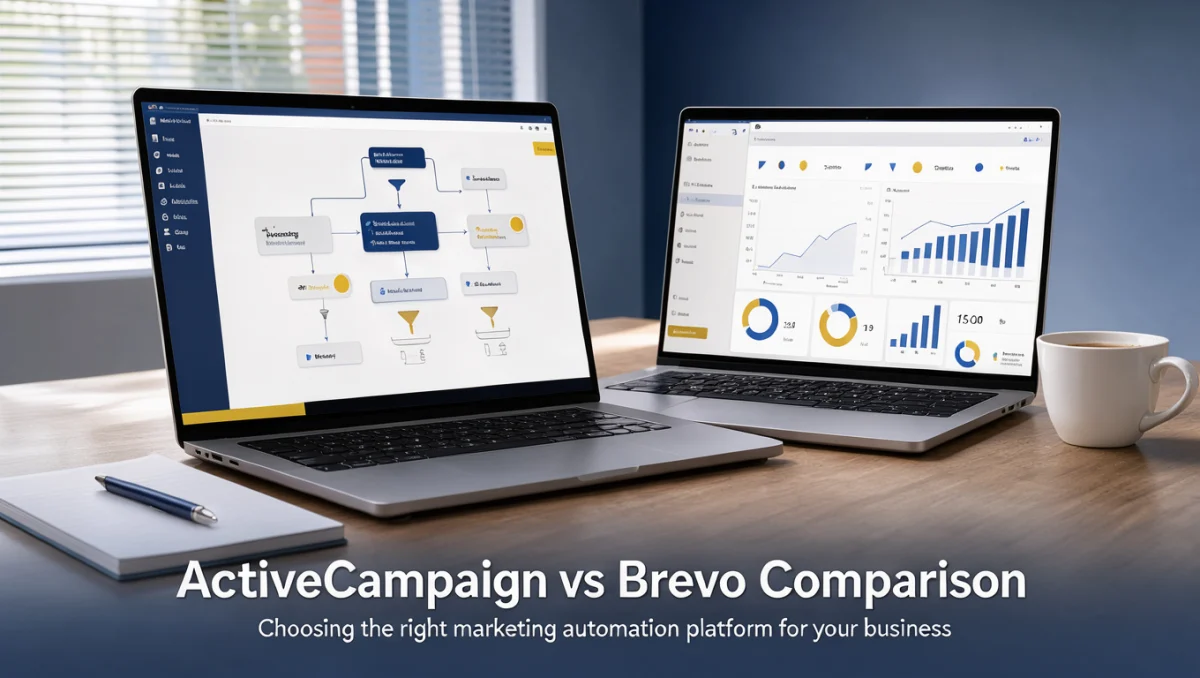
Selecting between these industry leaders comes down to your core technical goals: do you require an intricate automated logic system or an all-in-one hub for multi-channel messaging? At our review publication, we prioritize finding tools that align with your day-to-day requirements rather than merely comparing endless feature checklists. Deciding between both software options depends largely on your demand for multi-branched behavioral journeys versus unified customer messaging channels.
While both services accommodate diverse business models, their architectures handle subscribers, tracked events, and user interaction quite differently. Organizations aiming for detailed conditional branching and behavioral pathing often choose ActiveCampaign. Meanwhile, companies preferring an approachable balance of standard email campaigns and contact records frequently turn to Brevo. Mapping out internal processes before purchasing will protect your operational workflow.
Quick verdict: Scoring 8.4 / 10, our activecampaign vs brevo assessment shows that ActiveCampaign is ideal for brands requiring intricate behavioral funnels, while Brevo excels for teams needing unified multi-channel messaging. Neither option fits teams seeking only a bare-bones broadcast utility without list segmentation.
| Metric | Details |
|---|---|
| testedtruth score | 8.4 / 10 |
| Best for | Organizations balancing behavioral automation pipelines against centralized multi-channel communication requirements. |
| Not ideal for | Operators seeking bare-bones email blasts without audience segmentation or lifecycle tracking. |
| Key strengths | Advanced customer journey logic, multi-channel message coordination, contact timeline visibility, and structured audience segmentation. |
| What to check before buying | Review list volume thresholds, sending allowances, add-on costs, and user seat policies on each official vendor website. |
Our Systematic Platform Evaluation Framework
This assessment examines the underlying architecture, target demographics, and market alternatives for both systems. We apply seven standard benchmarks: features, interface usability, pricing structure, ecosystem integrations, organizational suitability, customer service, and market standing. Because limits and tier features change regularly, checking official vendor resources before buying is essential. Our editorial staff researched and wrote this piece with AI software support before thorough team verification.
The Core Decision: Automation Power vs. Unified Outreach

Your ultimate choice hinges on your central commercial objectives. When ongoing conversions rely on dynamic lifecycle sequences sparked by site browsing, custom contact properties, or pipeline updates, ActiveCampaign delivers the specialized workspace you need. Its system revolves around monitoring personal touchpoints and responding with tailored follow-ups.
Conversely, if your communication relies on transactional alerts, consolidated outreach through shared contact points, and an accessible contact database, Brevo offers a practical environment. Teams searching for effective Marketing solutions must assess whether stored subscriber counts or monthly sending volume will dictate operational expenses.
Strategic Value and Market Positioning
Recognizing the foundational strengths of both tools helps you avoid software that clashes with regular routines. The table below outlines their primary functional philosophies.
| Platform | Best for | Core strength | Consider if |
|---|---|---|---|
| ActiveCampaign | Teams running complex lead nurturing sequences and behavioral triggers | Multi-step automated workflows with conditional paths | Your sales and marketing cycles rely heavily on tracking contact actions |
| Brevo | Businesses managing shared inboxes, campaign dispatches, and transactional delivery | Centralized communication across campaigns and direct messages | Your team values unified communication handling from a single dashboard |
Benchmarking Both Systems Across Core Criteria
Features and Capability Depth
ActiveCampaign shapes its architecture around a sophisticated automation engine, conditional pathways, workflow split testing, and multi-factor lead scoring. Teams can assemble branching decision trees triggered by URL visits, campaign engagement, CRM pipeline movements, and profile tags. This level of control enables hyper-personalized customer lifecycle tracking.
Brevo focuses its feature set on diverse execution styles, combining promotional email newsletters, transactional notifications, and shared team communication. Even though basic automations are present, its primary focus is effortless campaign creation and dependable cross-channel delivery. Assess whether your business necessitates branching paths or straightforward messaging dispatches.
Interface and User Experience
Brevo offers an intuitive interface that keeps onboarding straightforward for beginners. Scheduling a broadcast, managing lists, and turning on standard trigger sequences takes minimal operational effort. The layout neatly segments subscriber profiles and outbound content, mitigating friction for non-technical team members.
ActiveCampaign features a considerably deeper console reflecting its technical scope. Because automations can connect with contact attributes, sales stages, and external triggers all at once, building campaigns demands careful architecture. New users must allocate time during rollout to organize tags, fields, and automation links.
Pricing Models and Organizational Value
Fee structures in this category differ considerably in how they meter usage. Certain providers calculate subscription tiers purely by aggregate stored subscribers; costs increase as your database expands regardless of sending frequency. Others bill primarily by monthly message volume, granting unlimited contact storage while metering dispatch volume.
Before choosing, review the current pricing pages of ActiveCampaign and Brevo. Verify how inactive profiles, account overages, and dedicated IP setups are handled. Balancing your projected database expansion with your typical send volume prevents unforeseen software fees.
Integrations and Data Continuity
Connecting your messaging tool with your digital stack guarantees consistent data sharing between online stores, merchant gateways, and web builders. ActiveCampaign operates an extensive directory intended to pull customer actions, purchase figures, and behavioral touchpoints into chronological profiles.
Brevo pairs smoothly with popular online systems, e-commerce storefronts, and workplace apps to synchronize customer information and power operational triggers. Review your software suite and confirm integration details directly through vendor directories.
Organizational Suitability
ActiveCampaign suits scaling enterprises, dedicated digital specialists, and agencies designing multi-stage conversion funnels. If your commercial model requires lengthy consideration phases, varied inventory, or direct sales team handoffs, this tool provides the required functional control.
Brevo is an excellent match for retail operations, small service firms, online publishers, and agile teams demanding consistent delivery without complex setup steps. It fits organizations that want unified messaging without maintaining distinct tools for marketing and transactional dispatches.
Support Services
Assistance channels vary noticeably depending on your active tier and vendor structure. Common support paths across this sector encompass searchable knowledge centers, user communities, ticketing queues, and live chat. Upper tiers frequently introduce faster reply times or dedicated implementation consultants.
Prospective users should review official documentation to verify available contact methods, language coverage, and coverage hours. Knowing your internal technical troubleshooting capability ensures ongoing operations stay uninterrupted.
Market Positioning
In the wider martech ecosystem, ActiveCampaign occupies a leading role as a lifecycle and behavioral automation platform. It goes head-to-head with heavy automation systems by emphasizing detailed behavioral criteria over standard mass-mailing functionality.
Brevo positions itself as a flexible multi-channel hub uniting standard outreach and everyday transactional dispatches. By connecting routine campaigns with real-time operational messages, it serves companies wanting to minimize disparate single-purpose tools.
Platform Strengths and Trade-Offs
ActiveCampaign: Advantages and Disadvantages
- Pro: Dynamic visual builder suited for multi-branch sequential journeys.
- Pro: Comprehensive chronological contact records tracking custom data and site interactions.
- Pro: Advanced segmentation filters utilizing historic engagement data.
- Con: Steeper initial onboarding requiring dedicated architectural planning.
- Con: Subscriber-based tiers require active list pruning to curb dormant record expenses.
Brevo: Advantages and Disadvantages
- Pro: Accessible workspace accelerating routine campaign production and scheduling.
- Pro: Integrated dashboard managing both marketing broadcasts and transactional delivery.
- Pro: Volume-based pricing tiers accommodating large audiences with moderate sending needs.
- Con: Automation sequences lack granular branching trees.
- Con: Contact profile customizability is comparatively basic.
Best-Fit Use Cases by Team Profile
Freelancers and Solo Consultants
Independent professionals overseeing modest subscriber lists usually find Brevo ideal for monthly updates, service announcements, and client check-ins. The streamlined setup saves maintenance time. However, educators marketing specialized courses or consulting bundles may lean toward ActiveCampaign for automated nurture tracks driven by resource downloads.
Small Business Owners
Boutique storefronts, local firms, and regional operators frequently benefit from Brevo because it combines standard promotional newsletters with transactional receipts. Teams spend less time managing complex condition triggers. If your organization relies on structured sales stages, ActiveCampaign becomes a stronger candidate due to its built-in deal tracking.
Dedicated Marketing Teams
In-house marketing groups centered on funnel optimization, lead qualification, and lifecycle flows often gain exceptional value from ActiveCampaign. The ability to split-test within automation pathways and trigger tailored messages based on content interaction gives marketing specialists refined control over audience touchpoints.
Operations and E-commerce Teams
E-commerce operations managing order confirmations, shipping updates, and general customer announcements often appreciate Brevo for its straightforward handling of operational notifications alongside sales promotions. Conversely, stores executing sophisticated abandoned cart sequences with dynamic cross-sell recommendations may lean toward ActiveCampaign for its detailed customer journey branching.
Teams That Should Look Elsewhere
Organizations that merely require an internal announcement distributor, a simple team notification system, or a basic contact address book should consider simpler email newsletter tools or internal collaboration software. Neither ActiveCampaign nor Brevo is intended to serve as a bare document repository or static spreadsheet replacement.
Actionable Steps to Determine Your Best Choice

Selecting between these systems requires assessing internal team bandwidth, contact cleanliness, and outbound frequency. Use these practical steps before subscribing:
- Outline your intended buyer journeys on paper to determine if you need multi-branch branching or simple sequential autoresponders.
- Evaluate your active list size against your estimated monthly send count.
- List all third-party platforms that need direct data connections with your email engine.
- Consult the official feature charts of both tools to confirm critical functionality.
- Estimate total software expenses over a full year while accounting for database growth.
Frequently Asked Questions
What drives the overall cost difference between these two systems?
Pricing structure depends on whether the vendor bills primarily by total stored contacts or by total monthly sending volume. When selecting a platform, audit your list growth rate against your planned broadcast frequency to determine which model yields better value.
How should a team prepare its contact data before migrating?
Teams should clean their contact records, remove inactive subscribers, consolidate tags, and standardize custom fields before moving to any new system. Clean data ensures accurate segmentation and minimizes unnecessary billing overhead on platforms that charge per contact record.
Which platform requires more technical setup time?
Platforms featuring deep conditional branching and multi-stage lifecycle funnels generally demand more planning and configuration time. Simpler broadcast tools with linear automation templates allow faster initial deployment for teams with limited technical resources.
Where should buyers confirm current feature availability?
Buyers should always inspect the official vendor plan breakdown pages directly. Platform features, add-on structures, sending thresholds, and user seat policies undergo regular updates across the software industry.
Final Take: Selecting the Right Software
Choosing between ActiveCampaign and Brevo is an operational decision guided by your organization marketing sophistication and infrastructure needs. Independent research published on Tested Truth helps professionals choose software that matches operational reality rather than speculative claims.
| Criterion | Score /10 | Reason |
|---|---|---|
| Features | 9.0 / 10 | Both platforms deliver strong core capabilities, with deep automation pathways balanced against multi-channel messaging options. |
| Ease of Use | 8.5 / 10 | Clean navigation across standard campaign builders offsets the learning curve associated with complex journey creation. |
| Pricing and Value | 7.5 / 10 | Buyers must carefully compare contact-based billing against volume-based limits to evaluate true organizational value. |
| Integrations | 8.5 / 10 | Broad connectivity across major content management systems and e-commerce platforms supports unified data flow. |
| Audience Fit | 9.0 / 10 | Each tool addresses clear organizational profiles, spanning advanced marketing setups to unified communication teams. |
| Support | 7.5 / 10 | Support availability depends heavily on selected tier levels, making independent verification on official sites necessary. |
| Competitive Position | 9.0 / 10 | Both solutions maintain clear, distinctive market positioning within the broader digital marketing technology sector. |
Overall Score: 8.4 / 10
For teams prioritizing automated lifecycle funnels, behavioral triggers, and deep segmentation, ActiveCampaign represents the strategic choice. For organizations seeking an accessible platform that unites campaign broadcasts with transactional messaging and contact management, Brevo provides a balanced operational hub. Review your list metrics and verify all requirements on the official vendor websites before finalizing your choice.