Teams that handle large volumes of written records often need software that turns messy language into usable business data. When weighing expertise ai new features, the smartest approach is to examine verifiable functions rather than promotional promises, and that is the lens the Tested Truth evaluation team applies here.
Organizations processing heavy documentation usually weigh extraction depth against the administrative effort required to run the tool. By reviewing functional components, team readiness and the verification steps available on the vendor site, buyers can judge whether this platform fits their analytical goals.
Quick verdict: With an overall testedtruth score of 7.8/10, this platform suits analytical groups that need structured document parsing and linguistic categorization. Users who only want simple conversational drafting will likely find the technical depth more than they need. Before buying, review the platform's capabilities alongside the training time your team can commit, and explore more reviews at Tested Truth.
| Evaluation Metric | Summary Finding |
|---|---|
| testedtruth score | 7.8/10 |
| Best for | Organizations managing extensive unstructured language records |
| Not ideal for | Individual creators seeking general chat drafting assistance |
| Key strengths | Linguistic taxonomy mapping and detailed entity identification |
| What to check before buying | Subscription tiers and data connector parameters on official channels |
How We Assessed Expertise AI
This review measures what Expertise AI is designed to accomplish, the audiences it serves, and how it stacks up against comparable tools, using the seven testedtruth criteria: features, ease of use, pricing and value, integrations, audience fit, support and competitive position. Plans, prices and limits shift frequently, so we flag the details to confirm on the official website before purchase. This article was researched and drafted with AI assistance, then reviewed and edited by the testedtruth Editorial Team.
What Expertise AI Does and Who Benefits
Expertise AI is an enterprise language processing platform built to pull meaning, relationships and structured insights from dense documentation. Companies adopt text intelligence software to cut the manual reading load across contracts, claims, research papers and customer records. Rather than acting as a basic conversational generator, the technology centers on linguistic analysis, taxonomy classification and semantic comprehension.
Likely users include information officers, legal compliance departments, medical record analysts and knowledge managers working across the wider Artificial Intelligence landscape. Teams in regulated settings often depend on explainable natural language processing, since every categorization step must stay transparent to internal auditors.
Core Capabilities and Notable New Features
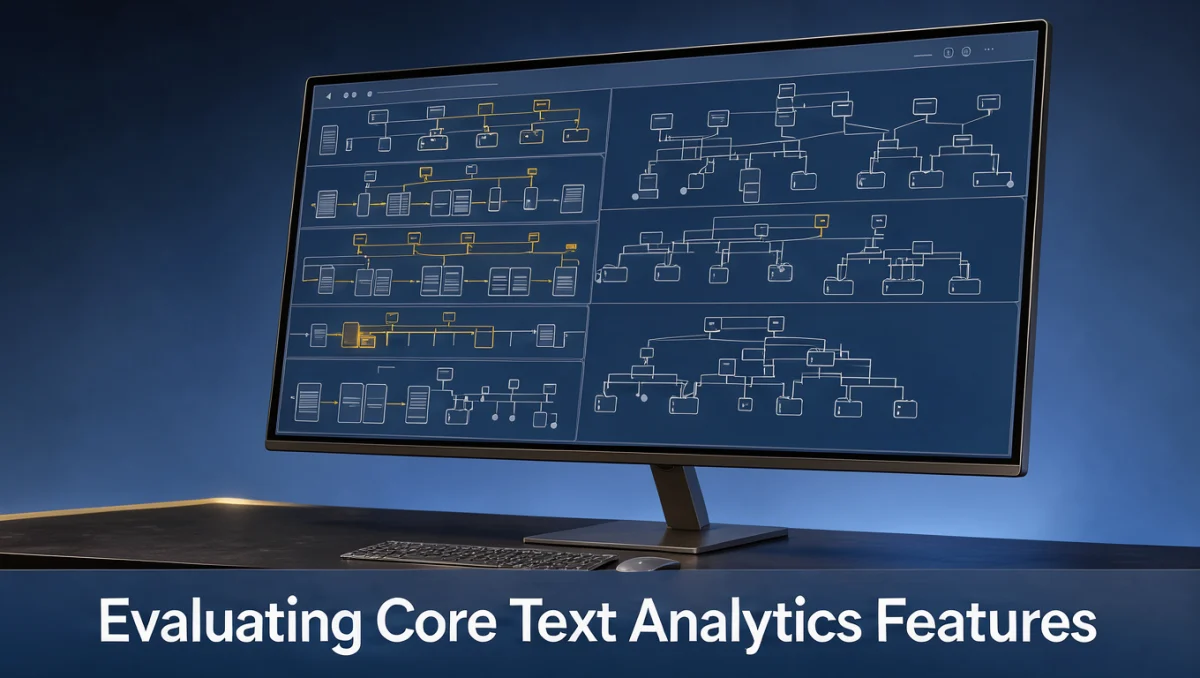
Enterprise language software revolves around a few foundational processes that help teams organize text archives. When investigating vendor capabilities and recent additions, evaluate how the underlying engine handles classification, metadata assignment and entity discovery.
Document Categorization and Classification
Accurate classification routes documents to the right teams without manual sorting. The platform analyzes contextual relationships between terms so records follow predefined taxonomies. Buyers should confirm on the official vendor portal how custom taxonomies are maintained and whether domain-specific terminology libraries need separate setup.
Information Extraction and Entity Recognition
Entity extraction pulls people, dates, organizations, regulatory references and contractual terms out of dense text. This turns unstructured material into records that analytical engines can query. Prospective users should check how relationship extraction links identified entities across multi-page files before committing.
Natural Language Understanding Workflow
Language comprehension parses semantic context so that identical words with different meanings are sorted correctly. Teams should evaluate how the workflow visualizes document relationships and whether staff can inspect the linguistic rules behind parsing decisions.
Ease of Use and Learning Curve
Advanced language intelligence systems require an initial configuration phase that calls for familiarity with taxonomy design and semantic concepts. Users accustomed to basic drafting assistants often find that enterprise text analytics needs careful schema definition before producing structured outputs.
Once rules and taxonomies are in place, non-technical staff can review parsed outputs comfortably. Still, building taxonomies and tuning extraction templates calls for deliberate onboarding. Teams should confirm on the official support pages what onboarding documentation is available to speed up readiness.
Pros and Cons
Pros
- Provides transparent language analysis suited to audit-sensitive projects.
- Enables deep categorization across specialized professional vocabularies.
- Turns large unstructured document archives into searchable structured databases.
- Helps research teams isolate relevant relationship markers quickly.
Cons
- Requires dedicated setup time to map custom business vocabularies properly.
- Demands more analytical literacy than simple conversational tools.
- Enterprise onboarding requires careful planning across technical departments.
Expertise AI Compared With Similar Tools
The text analytics market includes diverse platforms, each built around its own operational philosophy. Expertise AI concentrates on semantic intelligence and structured language understanding, while platforms such as IBM Watson emphasize broad enterprise cognitive frameworks spanning many data formats.
Cloud natural language services from Google Cloud and Amazon Web Services offer modular endpoints suited to developers building custom software stacks. Organizations that prioritize rule transparency and semantic taxonomy control often prefer specialized natural language software over purely probabilistic models. Compare workflow requirements on each official website to determine which operational style fits your technical stack.
Who Should Use Expertise AI

Corporate Knowledge Teams
Knowledge managers handling corporate repositories benefit from semantic indexing that uncovers hidden connections across historical reports and procedural documents.
Compliance and Risk Officers
Compliance teams under strict regulatory oversight benefit from rule transparency and reliable entity extraction across complex legal documentation.
Casual Marketers and Independent Writers
Solo entrepreneurs focused mainly on creative copy or social media content will likely find specialized text analytics excessive for everyday tasks.
How to Choose the Right Plan
Selecting a subscription means matching team size, security configurations and administrative seats against your budget. Because vendors revise subscription terms over time, confirming details on official commercial pages protects organizations from unexpected fees.
| What to Check | Why It Matters |
|---|---|
| Access seats and seat expansion rules | Adding analysts later can significantly change your monthly software budget. |
| Data processing allocations | Monthly throughput limits determine whether document archives can be parsed immediately. |
| Integration and data export methods | Moving structured data into existing databases requires supported delivery channels. |
| Training and deployment support options | Structured onboarding helps internal staff build operational competence faster. |
Frequently Asked Questions
What should buyers evaluate when assessing enterprise text analytics software?
Review taxonomy customization, extraction precision across industry terminology and the transparency of linguistic decisions. Confirm data handling practices and check how analysts interact with parsed metadata so the system aligns with internal compliance procedures before any contract is signed.
How do team skills influence adoption of language platforms?
Technical comfort with data modeling and linguistic concepts noticeably shortens configuration timelines. Teams with dedicated analysts adapt quickly to taxonomy structures, while teams without linguistic expertise should allow extra time for the onboarding resources on the official website.
What hidden costs often come with document intelligence tools?
Subscription fees cover base access, but implementation consulting, specialized domain dictionaries and extra user seats often add expense. Reviewing expansion tiers and data export terms on official vendor materials helps prevent unplanned spending.
How can organizations verify that text extraction outputs stay accurate?
Review teams should run controlled validation passes on representative document samples. Building benchmark test sets lets administrators confirm that identified entities meet internal quality guidelines before the tool is fully integrated into daily workflows.
Final Verdict on Expertise AI
Whether Expertise AI is the right fit depends on whether your organization needs deep semantic document extraction or simple text production. The platform offers strong value for structured analytical workloads where linguistic transparency and taxonomy control matter most.
| Evaluation Criterion | Score /10 | Reason |
|---|---|---|
| Features | 8.5 | Offers comprehensive linguistic parsing and structured entity recognition tools. |
| Ease of Use | 7.2 | Requires dedicated onboarding due to semantic taxonomy setup demands. |
| Pricing and Value | 7.4 | Buyers should verify official contract parameters against expected volume. |
| Integrations | 7.0 | Export workflows depend on supported enterprise connector standards. |
| Audience Fit | 8.8 | Directly matches information management and compliance team needs. |
| Support | 7.5 | Official documentation and deployment guidance must be checked directly. |
| Competitive Position | 8.0 | Maintains a distinct positioning focused on semantic language understanding. |
| Overall Score | 7.8 | Calculated composite rating across all seven evaluation criteria. |
Buyers handling high-volume documentation should review current technical specifications on the official vendor site. If your team has questions about software evaluation criteria, reach our editorial desk through the Tested Truth contact page or follow testedtruth on LinkedIn.