testedtruth may earn a commission when you buy through links on this page, at no extra cost to you. This does not affect our ratings.
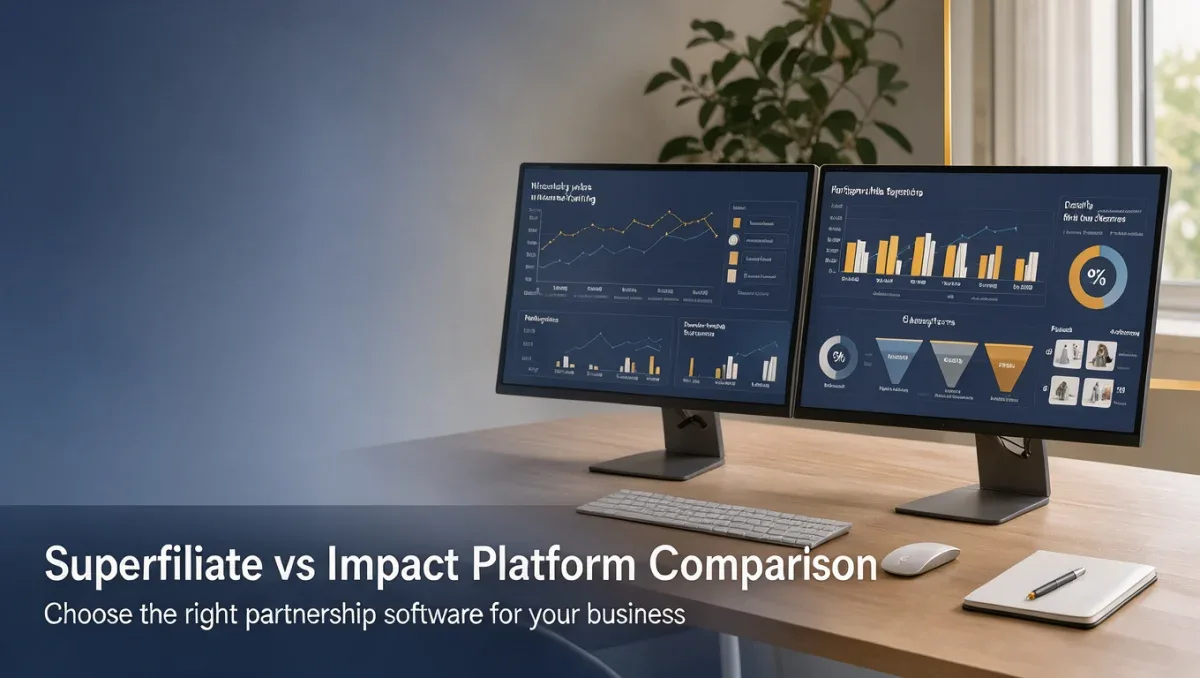
Deciding between Superfiliate and Impact means choosing between co-branded creator collaboration and full-scale partner ecosystem management. As brands grow their referral and affiliate programs, the platform you pick shapes how efficiently those partnerships run day to day.
At testedtruth, we assess both tools against a consistent framework so merchants can match a platform to their current growth stage. Knowing how each system is architected helps make sure your partnership budget produces lasting revenue through 2026.
Quick take: Pick Superfiliate if your brand is direct-to-consumer and relies on personalized creator storefronts and social commerce, scoring 8.2 / 10 on the testedtruth scale. Pick Impact if you run multi-channel affiliate, influencer, and publisher programs across an enterprise organization, scoring 8.1 / 10.
| Platform | Superfiliate | Impact |
|---|---|---|
| testedtruth score | 8.2 / 10 | 8.1 / 10 |
| Best for | Direct-to-consumer brands scaling creator partnerships | Mid-market and enterprise multi-channel partner programs |
| Core focus | Co-branded landing pages and personalized creator shopping experiences | Tracking, contracting, and partner discovery across global channels |
| Consider if | Creator identity and on-site conversion matter most | Cross-channel affiliate, media, and publisher management are required |
1. How testedtruth Evaluated Superfiliate and Impact
This review examines what each platform is designed to do, which teams it serves best, and how to make the call between them. We rely on seven testedtruth criteria: features, ease of use, pricing and value, integrations, audience fit, support, and competitive position. Plans, prices, and limits shift frequently, so we flag what to verify on each vendor's official website before purchasing. This article was researched and drafted with AI assistance, then reviewed and edited by the testedtruth Editorial Team.
2. Where Superfiliate and Impact Put Their Focus

Superfiliate is built to turn affiliates and influencers into co-branded shopping destinations. Its tools let creators showcase curated product collections with dedicated discount experiences right on the merchant's store, closing the distance between promotion and purchase.
Impact works as a broad partnership automation engine for managing varied relationships with traditional affiliate publishers, content creators, media companies, and business partners. Teams comparing E-commerce partnership tools will find Impact emphasizes partner discovery, fraud prevention, tracking accuracy, and contract oversight across global operations.
3. Choosing the Right Partner Platform for Your Situation
Picking between these platforms means matching your operational needs to each one's core design. Use the decision matrix below from Tested Truth to see which system suits your team's current capabilities.
| Situation | Choose Superfiliate if | Choose Impact if |
|---|---|---|
| Primary partner channel | You work mainly with creators, ambassadors, and social influencers | You manage a range of coupon sites, content publishers, and media networks |
| On-site customer journey | You want co-branded landing pages that match creator social handles | You need standard tracking links pointing straight to existing product URLs |
| Program maturity | Your direct-to-consumer store needs higher visitor-to-buyer conversion rates | Your enterprise requires advanced attribution modeling and contract compliance |
| International currency handling | Your transactions stay focused on core domestic or localized checkouts | You need multi-currency payouts and complex cross-border partner agreements |
| Team operational capacity | Your marketing team wants fast campaign launches without complex setup | Your organization has dedicated affiliate managers overseeing partner recruitment |
| Partner discovery needs | You prefer onboarding existing brand advocates and customer ambassadors | You need access to a large marketplace of registered global publishers |
4. How to Run Your Own Comparison
Testing both platforms lets your marketing team confirm workflows before committing long term. Apply the criteria below during your evaluation period.
4.1. Features to test
Check how each system tracks referral traffic and credits completed sales. When comparing superfiliate vs impact, set up sample partner campaigns on both to confirm that tracking links, promo codes, and landing page redirects record test conversions accurately and without delay.
4.2. Ease of use and team workflow
Time how long it takes a non-technical team member to create a partner campaign. Watch how partners sign up, retrieve promotional assets, and check commission earnings, and confirm the interface keeps friction low for both creators and managers.
4.3. Pricing model and contract terms
Review each vendor's fee structure on its official website. Find out whether billing uses flat monthly subscriptions, a percentage of tracked partner revenue, or per-user seat charges, since growing partnership volume can change total software costs substantially over time.
4.4. Integrations and technical stack
Confirm how each tool connects to your store platform, email marketing service, and customer data warehouse. Consult the official integration documentation for both to see whether data syncing needs custom scripts or works through standard native connectors.
4.5. Audience fit and partner types
Audit your current partner roster to see whether revenue comes mainly from social creators or traditional content publishers. Match those partner profiles to each platform's strengths so you don't push partners into promotion methods that don't suit them.
4.6. Customer support and onboarding
Send technical setup questions during sales conversations to gauge how clear and fast the responses are. Check the official support pages to see what onboarding help, technical guidance, and account reviews come with your chosen tier.
4.7. Competitive positioning for your roadmap
Look at where each platform is heading over the next two years. Decide whether your business gains more from deeper personalized shopping experiences or from wider enterprise channel expansion.
5. Cost Checklist for Both Platforms

Software costs in partner marketing depend on commercial volume and technical add-ons. Confirm the following points directly with vendor representatives before signing.
| Cost item | Ask about Superfiliate | Ask about Impact |
|---|---|---|
| Base subscription fee | Confirm the starting subscription rate on the official Superfiliate pricing page | Confirm minimum monthly commitment levels on the official Impact contract schedule |
| Usage and revenue fees | Ask whether transaction fee percentages apply as partner gross merchandise value grows | Check whether tracked revenue tiers introduce overage fees on monthly partnership volume |
| Partner recruitment costs | Ask whether inviting additional customer advocates incurs administrative charges | Confirm whether access to premium publisher networks requires extra subscription fees |
| Onboarding and migration | Verify whether technical help with storefront styling carries separate professional fees | Check implementation costs for enterprise tracking installation and data migration |
| Additional user seats | Ask whether multiple team logins change your base tier placement | Confirm seat pricing for external agency partners managing campaigns on your behalf |
6. How to Make the Decision
A step-by-step framework helps avoid common purchasing mistakes and keeps your team aligned throughout selection.
- Audit your active partner portfolio by sorting revenue sources into social creators, brand advocates, affiliate networks, and commercial media publishers.
- Confirm technical compatibility by reviewing store tracking scripts and checkout requirements in the official documentation of both platforms.
- Estimate total cost of ownership for each option using your projected monthly partner sales volume.
- Request live demos focused on partner onboarding, co-branded link generation, and commission payment processing.
- Choose the software that supports your main partner channel rather than paying for features built for other business models.
7. Frequently Asked Questions
Can a growing merchant switch between these two platforms easily?
Moving between partnership platforms means exporting partner records, issuing new tracking links, and updating promo codes across your network. Because partner links live on social profiles and published articles, switching requires careful planning and advance notice to affiliates to avoid tracking gaps.
How does working with an external agency affect this choice?
Marketing agencies often have established habits within specific tracking environments. Discuss platform preferences with your agency before buying, and confirm on each vendor's official website how agency permissions and client seat access are structured.
How do these platforms handle business growth?
Scaling brands should consider whether future growth depends on expanding creator networks or diversifying into large-scale publisher syndication. Many partnership tools adjust licensing costs as tracked partner revenue rises, so review long-term pricing tiers on vendor pricing pages before your program expands.
What tracking safeguards should merchants review before purchasing?
Accurate attribution depends on handling browser tracking restrictions and privacy standards reliably. Check the official technical documentation of both platforms to see how first-party tracking scripts, server-side data routing, and discount code attribution work under current web standards.
8. Final Verdict
Both platforms offer specialized value for modern digital commerce, but they serve different operational needs. Superfiliate suits direct-to-consumer merchants who want to amplify creator authenticity through personalized, high-converting storefronts. Impact provides the structural depth, fraud monitoring, and partner diversification that complex corporate programs need to manage several affiliate tiers at once.
| Criterion | Superfiliate score /10 | Impact score /10 | Reason |
|---|---|---|---|
| Features | 7.2 / 10 | 8.8 / 10 | Superfiliate focuses on creator co-branding, while Impact offers broad partner governance and attribution tools. |
| Ease of Use | 8.8 / 10 | 6.8 / 10 | Superfiliate offers a focused setup for store teams, whereas Impact has a steeper learning curve for full ecosystem configuration. |
| Pricing and Value | Confirm before buying | Confirm before buying | Review transaction fee schedules and monthly minimums on the official pricing pages of both vendors. |
| Integrations | Confirm before buying | Confirm before buying | Check compatibility with your current checkout software and analytics stack on official vendor resources. |
| Audience Fit | 8.5 / 10 | 8.0 / 10 | Superfiliate suits creator-led retail stores, while Impact fits enterprises running multi-channel partner programs. |
| Support | Confirm before buying | Confirm before buying | Confirm support response terms and dedicated manager availability on official vendor portals. |
| Competitive Position | 8.2 / 10 | 8.6 / 10 | Superfiliate leads in co-branded creator experiences, while Impact holds a distinct footprint in global affiliate automation. |
| Overall score | 8.2 / 10 | 8.1 / 10 | Superfiliate averages 8.2 / 10 across scored criteria; Impact averages 8.1 / 10 across scored criteria. |
Have a question about choosing software? Reach the testedtruth team through our contact page or follow testedtruth on LinkedIn for new reviews and comparisons.