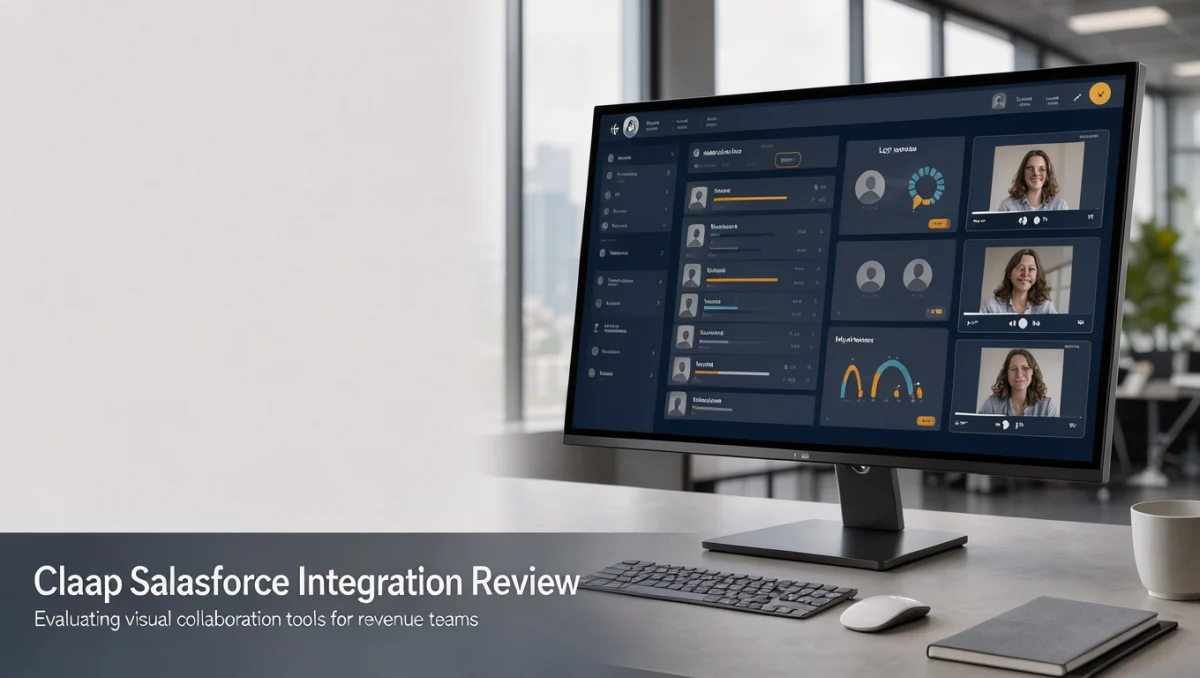
Before you commit to any new sales tool, it helps to know how it behaves once it sits inside your daily CRM routine. This review of the claap salesforce integration focuses on the questions revenue leaders and operations managers actually ask: how visual notes reach opportunity records, what it costs in setup time, and where the friction tends to appear.
Asynchronous video is useful because it lets account teams share context without fitting everyone into the same calendar slot. The harder question is whether those recordings, transcripts, and summaries land in the right pipeline stage without forcing reps to re-enter details by hand. We tested the workflow against the seven testedtruth criteria, and the verification steps we recommend are listed below.
Quick verdict: The integration earns a testedtruth score of 7.7 / 10. It suits sales organizations and customer success teams that want recorded deal documentation visible inside their CRM. It is less useful for solo operators or companies without a working CRM process that would make use of synchronized video.
| Metric | Assessment |
|---|---|
| testedtruth score | 7.7 / 10 |
| Best for | Revenue and customer success teams tracking pipeline changes through recorded updates |
| Not ideal for | Solo operators or organizations without consistent CRM governance |
| Key strengths | Asynchronous video messaging and meeting documentation |
| What to check before buying | CRM tier requirements and seat sync rules on the official website |
1. How testedtruth Reviewed Claap
We looked at what Claap is designed to do, who it serves, and how it compares with similar products, scoring it against seven criteria: features, ease of use, pricing and value, integrations, audience fit, support, and competitive position. Plans, prices, and limits change frequently, so we flag what to confirm on the vendor site before purchase. This article was drafted with AI assistance and then reviewed and edited by the testedtruth Editorial Team.
2. What Is Claap and Who Is It For?
Claap is a video collaboration platform that brings asynchronous screen recording, video notes, and meeting intelligence into one workspace. Teams use it to exchange short walkthroughs, document client conversations, and gather feedback without booking live calls. It is aimed at remote-first companies, sales groups, and product teams trying to reduce meeting volume.
Buyers evaluating video tools for AI-assisted workflows usually want automatic transcription, summaries, and structured notes tied to customer accounts. Claap addresses that by letting teams capture visual commentary and attach it to sales opportunities, which helps keep pipeline activity visible across different time zones.
3. Core Features of the Claap Workspace
Before judging the CRM link, it is worth understanding the platform's base functions: recording, collaborative annotation, and knowledge organization. These determine whether your revenue team can build a predictable handoff from recording to account record.
3.1. Video Recording and Screen Capture
Screen capture lets account representatives record tailored product demos, proposal walkthroughs, and implementation summaries. Viewers can adjust playback speed and leave comments at specific timestamps, which keeps cross-functional reviews moving without requiring everyone online at once.
3.2. Meeting Intelligence and Transcription
Meeting documentation transcribes conversations and produces concise summaries. Revenue teams use these outputs to pull out action items, objections, and feature requests from recorded client calls. Check the official Claap site to confirm which languages and transcription options cover your customer base.
3.3. Collaboration and Workspace Organization
Shared workspaces let teams sort customer-facing video into folders and account channels. Members can tag colleagues, assign follow-ups, and reply with inline video or text. Over time this builds a searchable record of customer conversations that sales, marketing, and product can revisit.
4. Ease of Use and Learning Curve
Asynchronous video only pays off if people actually use it, so reps need to record, edit, and share clips with little friction during active deals. Claap offers a clean interface with straightforward playback controls and comment threads, which keeps onboarding light.
Connecting the workflow to an enterprise CRM such as Salesforce adds setup work. Administrators need to define sharing rules and confirm how links appear in opportunity feeds. Authentication typically requires admin permissions, so revenue operations should budget time to walk individual reps through linking their accounts.
5. Pros and Cons of Claap in Revenue Workflows
Visual collaboration software brings real gains, but it also creates governance duties. The points below help you judge whether your team is ready for it.
5.1. Operational Advantages
- Reduces meeting fatigue by moving routine updates into asynchronous video.
- Keeps video documentation next to written comments and interaction history.
- Supports timestamped feedback that clarifies technical details or contract terms.
- Provides structured workspaces that help sales and engineering share knowledge.
5.2. Practical Limitations
- Works only if the team consistently records, labels, and links its videos.
- Advanced enterprise sync features may depend on specific plan tiers, so confirm details on the official Claap pricing page.
- CRM data quality still depends on users following agreed tagging conventions.
6. Claap vs Similar Video and Collaboration Tools
The video messaging market includes products built for different jobs. Loom centers on fast screen recording and broad video sharing for everyday workplace communication. Gong targets enterprise revenue intelligence, with conversation analytics and pipeline risk forecasting aimed at sales leadership.
Claap sits between lightweight asynchronous recording and formal meeting intelligence. Teams wanting one workspace for internal updates and client-facing recordings often compare it with single-purpose recording tools. Review your current stack to decide whether you need enterprise forecasting or flexible team video.
7. Who Should Use Claap?
Different organizations get different value from visual communication software. Matching your team profile to the platform's strengths makes adoption more productive.
7.1. Recommended User Profiles
- Mid-Market Sales Teams: Account executives who share personalized proposal walkthroughs and need to record client commitments.
- Customer Success Managers: Specialists producing onboarding tutorials without repeating live training sessions.
- Distributed Product and Revenue Teams: Cross-functional groups that need visual feedback between sales notes and product development.
- Solutions Engineers: Technical consultants documenting custom setups that prospects can revisit during vendor evaluations.
7.2. When to Consider Alternative Approaches
Solo entrepreneurs and very small businesses with few customer interactions may find email or basic screen recording enough. Organizations without an active CRM will gain little from CRM-oriented sync. Teams with strict on-premise hosting requirements should also confirm fit in the vendor's technical documentation.
8. How to Choose the Right Plan for CRM Workflows
Vendors change tier structures, seat allocations, and admin controls over time. Before buying, check each requirement against the official Claap pricing page.
| What to Check on the Official Page | Why It Matters for Your Business |
|---|---|
| CRM connectivity prerequisites | Many vendors reserve enterprise CRM connections for higher-tier subscriptions. |
| User seat and guest access rules | Per-seat billing affects the cost of adding specialists or managers. |
| Video storage and retention policies | Archiving sales calls across multiple years requires adequate storage. |
| Administrative and permission controls | Protecting client confidentiality requires fine-grained control over who can view and share deal recordings. |
9. Frequently Asked Questions
How should teams prepare their CRM before connecting video tools?
Revenue operations should define naming conventions and decide which objects, such as leads or opportunities, will receive video links. Setting these rules before rollout keeps data consistent across the sales department.
What should buyers review regarding subscription costs?
Confirm minimum seat commitments, renewal terms, and whether advanced transcription carries separate usage fees. Reviewing the official pricing page makes it easier to forecast ongoing costs.
Can client-facing video links be shared with external prospects?
Video platforms typically allow public or access-restricted links for external viewers. Administrators should check sharing settings so internal annotations stay hidden from prospects.
How does asynchronous video change deal cycles?
Recorded walkthroughs let decision-makers review complex proposals on their own schedule, without coordinating several calendars. Teams often find this shortens turnaround on contract questions and technical reviews.
10. Final Verdict
At Tested Truth, we judge tools on operational clarity and long-term workflow value. The claap salesforce integration gives revenue teams a practical way to connect asynchronous video updates and meeting records with customer tracking. Buyers should verify plan prerequisites and governance rules on the official Claap website, but for teams modernizing remote sales operations it is a strong option to evaluate.
| Criterion | Score / 10 | Reason |
|---|---|---|
| Features | 8.0 / 10 | Strong recording, transcription, and workspace tools |
| Ease of Use | 8.5 / 10 | Clean interface with light onboarding |
| Pricing and Value | 7.5 / 10 | Good value, with CRM features tied to higher tiers |
| Integrations | 7.0 / 10 | Useful CRM link that needs admin setup |
| Audience Fit | 8.5 / 10 | Well suited to remote sales and CS teams |
| Support | 7.0 / 10 | Adequate guidance, depends on plan level |
| Competitive Position | 7.5 / 10 | Balances recording and meeting intelligence |
Overall score: 7.7 / 10
For more guidance on choosing business software, or to send us a question about workflow tools, contact our editorial team at https://testedtruth.com/contact/ or follow testedtruth on LinkedIn at https://www.linkedin.com/company/testedtruth/.
See More Artificial Intelligence