testedtruth may earn a commission when you buy through links on this page, at no extra cost to you. This does not affect our ratings.
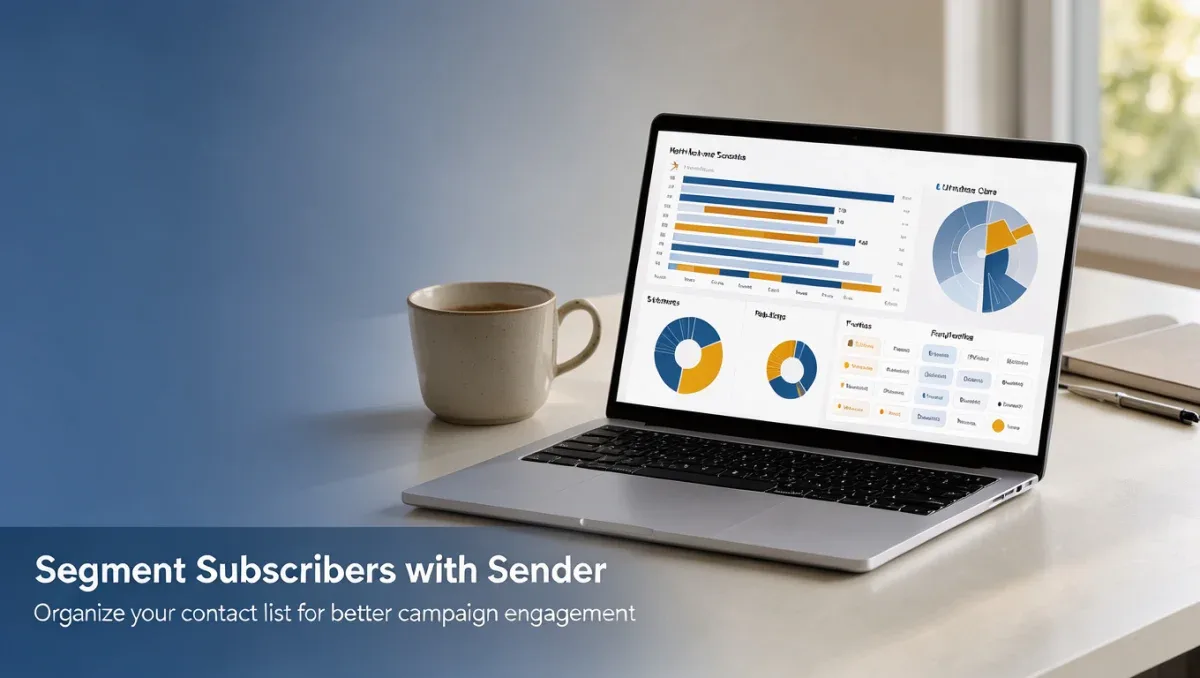
Organizing your contact list into well-defined groups, based on real subscriber activity and profile details, is the starting point for any effective segmentation effort. At Tested Truth, we focus on repeatable procedures that keep contact records clean and every message relevant to its recipient.
Sending the same message to everyone leads to fatigue and unsubscribes. When you know how to segment email subscribers with sender email marketing, you can match content to each group's interests, sustain engagement, and protect deliverability across every campaign you run.
Quick answer: Effective segmentation means auditing your contact fields, defining behavioral rules, grouping recipients by demonstrated interest, and scheduling regular cleanups. A structured, repeatable process lets marketing teams send focused communications without adding unnecessary administrative work.
| Element | Specification |
|---|---|
| Who this guide is for | Marketers, founders, and small teams that want structured subscriber targeting |
| What you need before starting | An active contact list, verified account access, and defined customer lifecycle milestones |
| What you will have at the end | Organized contact groups, clear behavioral criteria, and a thirty-day review schedule |
1. How the Tested Truth team approached this guide

This guide pairs the capabilities of the software covered here with the Tested Truth buying framework, so you can choose the option that suits your business. Plans, prices, and limits change frequently, so we note what to verify on the official website before purchasing. The article was researched and drafted with AI assistance, then reviewed and edited by the Tested Truth Editorial Team.
2. Preparing before you begin
Careful preparation keeps list sorting accurate and prevents accidental gaps in communication. Teams applying modern Marketing strategies should gather all core subscriber attributes before setting up any grouping rules.
- Purchase history, sign-up dates, and summaries of past campaign interactions for each subscriber
- Account credentials with administrative rights to manage contact groups and tags
- Clear definitions of audience subgroups, such as new subscribers, repeat buyers, and dormant profiles
- Consent records confirming permission for promotional messages within each segment
3. A step-by-step workflow for subscriber segmentation
A systematic workflow lets teams segment contacts predictably and avoids overlapping communication rules. Always check the official Sender documentation to confirm where specific grouping controls are located.
- Define subscriber criteria: Decide whether audience members will be divided by demographic variables, sign-up sources, or interaction patterns so that each target group is distinct.
- Audit incoming subscriber data: Confirm that registration forms collect the exact information needed for sorting, such as industry, location, or customer preferences.
- Apply grouping parameters: Configure contact filters that place contacts into groups automatically once they meet specific criteria, so new entries flow into the right streams.
- Isolate inactive contacts: Move accounts with no interaction over an extended period into a separate retention pool to protect overall sender reputation.
- Review segment boundaries: Make sure communication sequences do not overlap, so recipients do not receive contradictory or repetitive emails on the same day.
4. Your first 30 days of segment management

Keeping contacts clean requires consistent monitoring during the first month of implementation. The schedule below highlights the essential milestones for tracking how contacts move between groups.
| Week | Routine to build | Why it matters |
|---|---|---|
| Week 1 | Inspect data capture rules and test new subscriber categorization | Confirms that new records land in the correct groups right away |
| Week 2 | Monitor dispatch engagement across newly segmented groups | Reveals early trends in recipient response and flags unexpected filtering gaps |
| Week 3 | Audit inactive criteria and re-engagement triggers | Prevents disengaged contacts from pulling down campaign deliverability averages |
| Week 4 | Consolidate underperforming segments and adjust targeting filters | Removes unnecessary structural complexity before the list grows further |
5. Common mistakes and how to avoid them
Segmentation errors usually come from overcomplicating the setup or neglecting list hygiene. Keeping grouping rules practical prevents common operational bottlenecks.
- Creating too many micro-segments: Managing dozens of tiny audiences adds needless work, so start with three or four primary categories.
- Ignoring stale profile data: Subscriber preferences change over time, so profile-confirmation campaigns sent twice a year are worthwhile.
- Relying only on open metrics: Email clients often distort open records, so balance opens with click behavior and site activity.
- Failing to exclude unsubscribed profiles: Confirm that global suppression rules apply instantly across every custom group.
6. When to ask for help
Some organizational challenges call for advice from specialized marketing professionals or platform support. Seek outside guidance in the following situations:
- Technical discrepancies appear between external database records and your primary marketing platform
- Deliverability drops noticeably after restructuring broad contact categories
- Regulatory questions come up about data privacy across international target markets
- Automated synchronization scripts create duplicate profiles across multiple segments
7. Frequently asked questions
How much weekly maintenance does audience segmentation require?
Maintaining basic audience divisions takes roughly one hour each week to review list growth, confirm proper tagging, and archive disengaged contacts. Teams running high-volume campaigns or complex automation paths may need more time for weekly performance reviews and database reconciliation.
What should teams do if subscribers appear in the wrong segment?
Review the filter conditions and custom field definitions that determine group entry. Adjusting the rule logic on the platform corrects future assignments, while existing discrepancies can be fixed by running a manual batch update across the affected subscriber list.
Is a technical consultant needed to organize basic marketing segments?
Most small businesses can set up functional segmentation rules on their own using standard demographic and engagement attributes. Outside help becomes most useful when integrating third-party customer relationship databases or managing complex synchronization across multiple systems.
How should businesses handle subscribers who show zero engagement?
Create a dedicated dormant segment to keep unengaged contacts out of routine sends. Run a gentle re-engagement sequence, and remove profiles that stay inactive after a set period to protect your delivery reputation.
8. Next steps
Clear segmentation practices create a reliable foundation for all outbound communication. Keep refining your database structure with these actions:
- Review your current contact list to identify natural audience divisions based on recent interactions.
- Write down criteria defining what qualifies a contact as active, engaged, or dormant.
- Visit the official Sender knowledge base to verify current platform guidelines and filter configurations.
- Schedule a routine thirty-day audit to review segment sizes and prune inactive addresses.
Have a question about choosing software? Send it to the Tested Truth team through our contact page, or follow Tested Truth on LinkedIn for new reviews and comparisons.