Some links on this page to Tested Truth may earn a commission when you buy through them, at no extra cost to you. Our ratings stay independent.
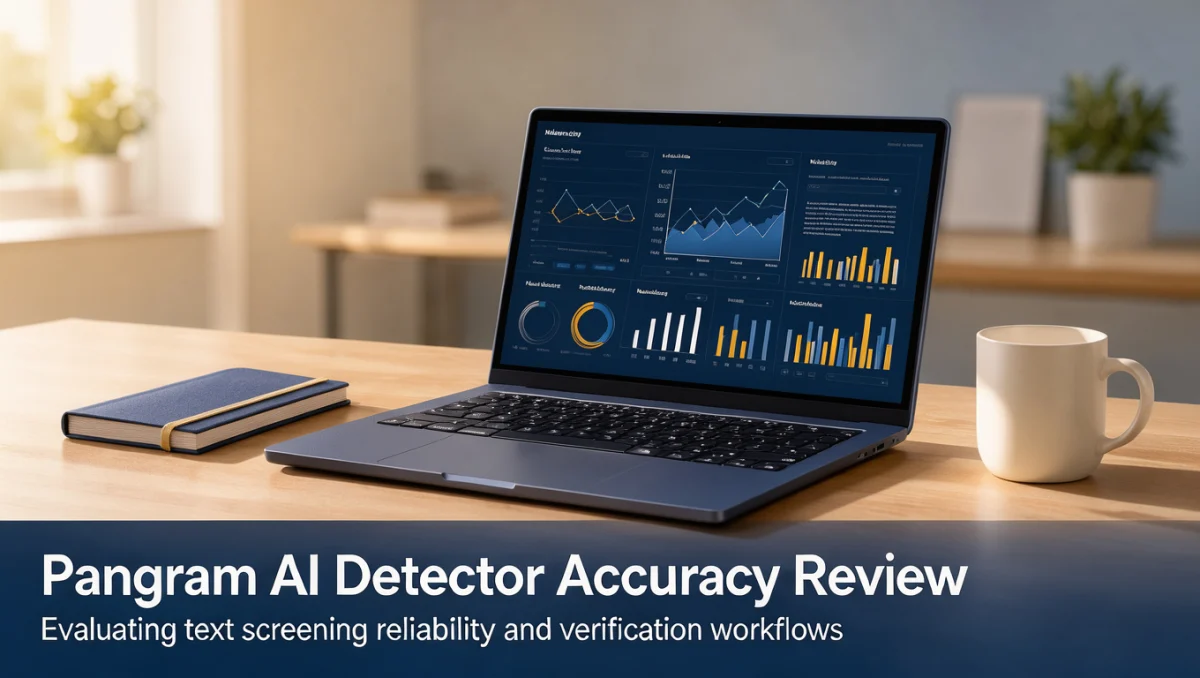
For teachers, editors, and publishers trying to separate machine-written copy from human prose, pangram ai detector accuracy is usually the first question. Our readers tend to value steady, explainable text scanning over bold promises.
Short answer: Pangram earns an overall score of 7.5/10. It suits editorial teams that want structured screening and manual checks, and it is a poor fit for anyone hoping for automatic yes-or-no verdicts with no human review.
| Metric | Summary |
|---|---|
| Tested Truth score | 7.5/10 |
| Best for | Teams that want organized text screening and manual verification steps |
| Not ideal for | Individuals expecting automated disciplinary calls without human review |
| Key strengths | Statistical pattern detection, flagging of stylistic oddities, and workflow organization |
| Check before buying | Scanning quotas, accepted file formats, and licensing terms on the vendor portal |
1. How We Tested Pangram
We assessed Pangram against seven Tested Truth criteria: features, ease of use, pricing and value, integrations, audience fit, support, and competitive position. Plans and limits change frequently, so confirm current details on the official site before committing. This article was drafted with AI assistance and then reviewed and edited by the Tested Truth Editorial Team.
2. What Pangram Does and Who Uses It
Pangram sits in the text analysis and automated content verification category. It checks written documents for statistical traits common in outputs from language models, helping schools, publishers, and marketing teams confirm that submitted work reflects genuine authorship.
Its typical users include instructors grading coursework, content managers reviewing freelance drafts, and compliance staff auditing web articles. Teams that rely on Artificial Intelligence tools benefit from clear review procedures so that assumptions about who wrote a text are never taken for granted.
3. Key Features in Pangram
Tools in this space generally combine statistical pattern analysis, document handling, and reporting for text collections.
3.1. Statistical Pattern Analysis
Pangram examines word distribution, variation in sentence length, and predictable phrasing. Machine-generated passages often show even sentence rhythm and predictable word choices, and the software surfaces these traits for reviewers.
3.2. Batch Scanning and Queues
Editorial desks often process many essays or articles at once. Pangram lets users load material, monitor progress, and manage incoming reviews without pasting each paragraph by hand.
3.3. Section-Level Flagging
Instead of returning only one overall probability, the platform highlights particular phrases with synthetic-looking structure. Editors can then review disputed passages individually rather than rejecting a whole document.
3.4. Exportable Reports
Academic hearings and editorial disputes need documentation that others can read. Pangram produces summaries of flagged segments that support open conversations between reviewers and authors.
4. Ease of Use and Learning Curve
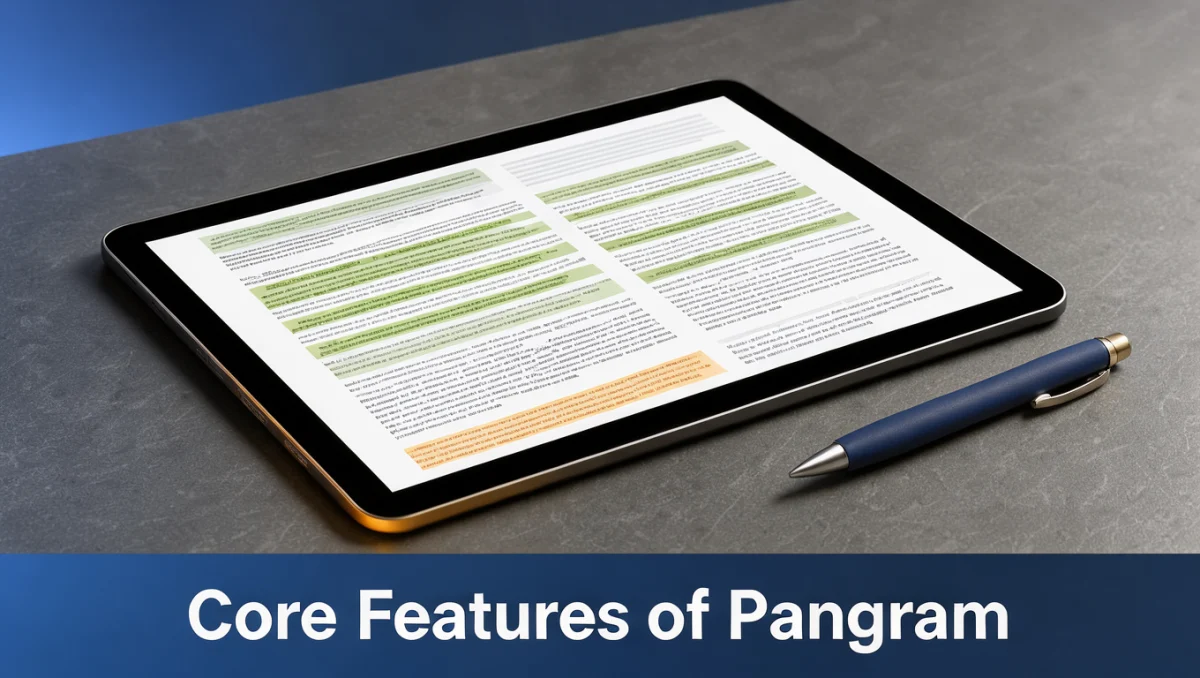
Most text checkers offer a simple intake area where users paste text or upload a file. Pangram follows this pattern with a clean dashboard focused on submission and visual markers.
People with little technical background can read the highlight overlays in their first session. Interpreting probability margins properly, however, takes a short internal briefing so teams do not treat a probability as proof.
5. Pros and Cons of Pangram
Comparing practical strengths with known limitations helps organizations set realistic expectations.
5.1. Pros
- Offers visual breakdowns of segments to support human editorial judgment.
- Handles multi-document assessment through structured queues.
- Produces documented summaries suitable for institutional records.
- Applies consistent pattern analysis across different subjects.
5.2. Cons
- Needs human verification, since automated scanners can misclassify text.
- Has difficulty with heavily edited hybrid writing where human and synthetic sentences closely blend.
- Accuracy depends on changing model behavior, so the vendor must keep adjusting the system.
6. Pangram Compared With Other Tools
Looking at Pangram next to established competitors shows where each product concentrates its development effort.
| Platform | Core Positioning | Best For |
|---|---|---|
| Pangram | Document analysis centered on structural variance and anomaly flags | Editorial desks that need clear visual segment checks |
| Turnitin | Academic integrity suite pairing plagiarism databases with writing analysis | Universities that need integrated classroom assignment workflows |
| Copyleaks | Multi-language text inspection with source-matching tools | Publishing networks handling varied international submissions |
| Originality.ai | Web content auditing combined with editorial quality tracking | Web publishers reviewing external contributor portfolios |
Academic suites lean toward student roster integration, while Pangram focuses on pure text scanning diagnostics. Buyers should confirm their exact administrative needs before choosing.
7. Who Should Consider Pangram
Matching the tool to your organization's structure avoids unnecessary friction in daily work.
7.1. Freelance Editors and Proofreaders
Independent editors reviewing outside manuscripts can use the software as an initial screen, directing close editing attention to suspicious paragraphs.
7.2. Small Business Owners and Marketing Managers
Operators who hire contract copywriters can screen submissions before publication. This helps protect brand voice and confirm that contractors contribute original creative work.
7.3. Instructors and Teaching Assistants
Educators can flag essays that deserve a follow-up conversation with a student. The tool works best as a discussion starter, not an automatic grading mechanism.
7.4. Teams That Should Look Elsewhere
Organizations wanting fully automated disciplinary action should not rely on statistical detection alone. Purely mathematical scanners cannot account for non-native idioms or highly technical academic syntax without human judgment.
8. How to Choose the Right Plan
Buying decisions depend on monthly text volume and the number of seats your team needs. Verify these operational details on the vendor portal before committing a budget.
| What to Check | Why It Matters |
|---|---|
| Word and character limits | Prevents service interruptions during busy publishing periods. |
| Multi-seat admin permissions | Lets departments collaborate without sharing individual logins. |
| Storage and archive windows | Keeps past verification records available for audits. |
| File format compatibility | Confirms the system accepts the formats your contributors use. |
9. Frequently Asked Questions
9.1. How should editorial teams verify flagged passages?
Run manual source checks, ask writers for preliminary research notes, and decide whether flagged text merely reflects common industry phrasing rather than synthetic output.
9.2. What should buyers confirm about scanning allowances?
Check word quotas, monthly reset dates, and overage rules on the official Pangram pricing page so the plan matches your expected submission volume.
9.3. Why is human oversight still needed?
Statistical tools measure predictability rather than intent. Formal academic prose or non-native writing can accidentally resemble automated sentence patterns.
9.4. How should an organization set a fair review policy?
Define written procedures that require multiple review stages and author interviews before any penalty is based on an automated score.
10. Final Verdict
A close look at pangram ai detector accuracy shows a dependable screening platform that gives careful reviewers a structured way to check content.
| Criterion | Score /10 | Reason |
|---|---|---|
| Features | 7.5 | Provides organized screening, anomaly highlights, and exportable documentation. |
| Ease of Use | 8.0 | Offers an intuitive submission layout with clear visual markers. |
| Pricing and Value | 7.0 | Buyers must confirm that scanning allowances cover their monthly volume. |
| Integrations | 6.8 | Administrative software connections should be verified on the official portal. |
| Audience Fit | 8.2 | Well suited to editors, publishers, and educators who practice responsible manual review. |
| Support | 7.2 | Relies on standard inquiry channels that buyers should review on the official site. |
| Competitive Position | 7.5 | Holds its ground among focused text screening tools. |
| Overall score | 7.5 | A balanced system that works best alongside transparent human editorial policies. |
For academic or editorial pipelines, Pangram can be a useful diagnostic companion when paired with clear internal policies. Have questions about choosing software? Send them through the Tested Truth Contact Portal or connect with our editorial team on LinkedIn.