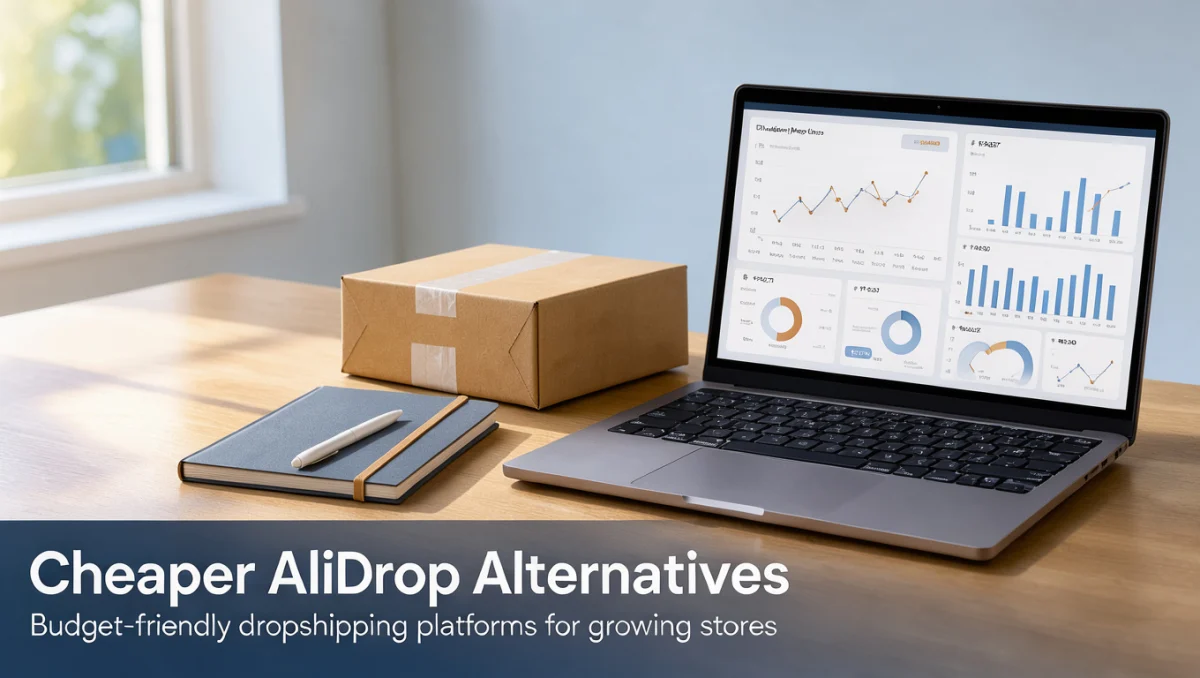
Launching a dropshipping business rarely starts with a large budget, so many store owners look for lower-cost software before they commit to a monthly plan. Dropshipping tools link your online store to wholesale suppliers, keep product listings current, and pass customer orders straight to fulfillment partners. At Tested Truth, we compare how each application handles product imports, order routing, and supplier coordination so that store owners can make choices that last.
Choosing software for an online shop means weighing the upfront setup cost against recurring maintenance fees. AliDrop concentrates on importing products from specific marketplaces into private storefronts, while other systems offer different pricing structures, supplier networks, and automation options. The right pick depends on whether you prefer a monthly subscription or a one-time purchase.
Quick verdict: AliDrop earns 7.4 out of 10. It suits independent merchants who want direct catalog imports from established marketplaces into private web stores. It is less suitable for high-volume operations that need multi-supplier routing across domestic warehouses or teams that require full enterprise resource planning.
| Metric | Summary |
|---|---|
| testedtruth score | 7.4 / 10 |
| Best for | Solo store owners running focused shops with supplier-direct sourcing. |
| Not ideal for | High-volume teams that need multi-origin fulfillment and advanced enterprise logistics. |
| Key strengths | Dedicated product importing, catalog editing, and automatic order forwarding to suppliers. |
| What to check before buying | Confirm renewal terms, third-party hosting requirements, and supplier fulfillment fees on the official vendor site. |
How Tested Truth Reviewed AliDrop
This review examines what AliDrop is designed to do, who it serves, and how it stacks up against similar tools. We judge each product on seven criteria: features, ease of use, pricing and value, integrations, audience fit, support, and competitive position. Plans, prices, and limits change frequently, so we flag the details you should verify on the official website before buying. This article was researched and drafted with the help of AI tools, then reviewed and edited by the Tested Truth Editorial Team.
Why Store Owners Look for Cheaper AliDrop Alternatives
Dropshipping depends on keeping a healthy margin between wholesale product costs and retail prices. When software subscriptions are due before sales reach a steady level, they can strain monthly cash flow. Comparing alternative applications helps store managers find tools that fit a modest starting budget.
Technical requirements also push retailers to explore other options. Some run their shops on hosted platforms, while others install and host their own stores using open-source content management systems. Since dropshipping tools are built for different hosting setups, picking software that matches your architecture avoids costly switching later.
Sourcing variety is another key reason to look beyond a single tool. Some applications focus mainly on Asian supplier directories, whereas others connect with distribution centers across Europe and North America. A wider range of fulfillment origins can shorten shipping times and improve customer satisfaction during busy sales periods.
Core Criteria for Evaluating Dropshipping Platforms
Picking an alternative requires understanding how software features affect daily workload. Judging tools against clear operational criteria helps buyers avoid surprise costs and technical limits.
Catalog Import and Product Data Customization
Import tools should capture descriptions, variations, and high-resolution images without breaking storefront formatting. Check whether the software supports bulk field edits, automatic currency conversion, and global markup changes across entire product categories.
Order Forwarding and Tracking Automation
Order processing is the most time-consuming task for growing stores. Strong platforms send order details to suppliers, capture tracking numbers once packages ship, and update customer notifications without manual data entry.
Inventory Synchronization and Price Protection
Wholesale prices fluctuate, and supplier stock changes constantly. Reliable software checks vendor pages regularly, marks out-of-stock items, and adjusts retail prices automatically, so you do not fulfill orders at a loss.
Technical Integration and Storefront Compatibility
Dropshipping software must communicate smoothly with your content management system or hosted ecommerce provider. Stores that use Artificial Intelligence tools or other ecommerce innovations need flexible infrastructure that exchanges data without custom coding.
Quick Comparison of Alternatives to AliDrop
| Tool | Best For | Core Strength |
|---|---|---|
| DSers | Merchants running hosted stores who want automated supplier order processing. | Direct marketplace integration with bulk ordering. |
| Dropified | Operators managing diverse merchandise across several supplier networks. | Multi-channel product importing and automated fulfillment flows. |
| Spocket | Retailers aiming for fast delivery through regional suppliers. | Curated domestic distribution sources in Western markets. |
| Modalyst | Apparel and lifestyle brands seeking boutique vendor partnerships. | Catalog sourcing from curated independent designer brands. |
| WooDropship | WordPress store owners who want a direct plugin for product imports. | Simple catalog imports into self-hosted store installations. |
Detailed Profiles of Leading Competitor Options
DSers
DSers is an official marketplace dropshipping partner built to handle high-frequency order placement. It targets merchants who process large volumes and need to manage several supplier sources for the same catalog listing.
The tool suits merchants on hosted commerce platforms who want faster bulk checkout workflows. Teams handling dozens of shipments a day benefit from automatic tracking sync and quick supplier switching when a primary vendor runs out of stock.
Consider DSers if your main bottleneck is the time spent submitting orders to wholesale vendors one by one. Confirm plan structures and transaction limits on the official DSers website before choosing a subscription tier.
Dropified
Dropified serves operators who source products from multiple online marketplaces and specialty dropshipping suppliers. It automates product additions, order receipt tracking, and customer fulfillment across independent storefronts.
Store owners managing multi-channel catalogs find it useful for pulling items together from different manufacturers. The workflow includes product research helpers and alerts when supplier inventory changes unexpectedly.
Consider Dropified if your strategy goes beyond a single supplier catalog and needs multi-platform listing. Review the official Dropified pricing page to see which features match your store setup.
Spocket
Spocket focuses on suppliers based in North America and Europe, with an emphasis on shorter transit times for Western customers. This contrasts with tools that depend on long international shipping routes with extended delivery windows.
The platform fits boutique retailers whose customers value fast arrival more than the lowest possible wholesale cost. Quick shipping often leads to fewer returns and stronger customer retention for branded stores.
Consider Spocket when your brand centers on fast delivery and regional fulfillment. Verify supplier catalog access and shipping terms directly on the official Spocket website before committing your monthly budget.
Modalyst
Modalyst connects ecommerce businesses with designer brands, private label manufacturers, and established wholesale distributors. It concentrates on curated fashion, apparel, and lifestyle products suited to established retail stores.
The system is aimed at fashion entrepreneurs and brand builders who want distinctive inventory rather than generic marketplace goods. It syncs with popular hosted storefront platforms.
Consider Modalyst if your store prioritizes boutique branding and premium presentation over high-volume budget products. Check category availability and vendor terms on the official Modalyst site.
WooDropship
WooDropship is designed for store operators who run their own WordPress and WooCommerce installations. It offers browser-assisted importing and catalog management built for self-hosted commerce.
Solo operators who want full control over their server, customer data, and software environment will find this setup appealing. It removes dependence on closed proprietary commerce platforms.
Consider WooDropship if your store runs on open-source web software and you need dedicated import features. Confirm ongoing compatibility and maintenance requirements on the official WooDropship website.
Cost Considerations Beyond Software Subscriptions
The true cost of dropshipping software includes more than the platform fee. Buyers should account for the external services needed to keep a store running.
- Hosting and Domain Infrastructure: Self-hosted plugins require a virtual server, security certificates, and domain upkeep, while hosted software bundles infrastructure into its regular fee.
- Payment Processing Charges: Payment gateways apply variable and fixed fees to every customer purchase, regardless of which software you choose.
- Supplier Fulfillment and Shipping: International transit fees, packaging surcharges, and customs duties differ widely between fulfillment centers.
- Storefront Plugins and Themes: Checkout optimizations, email marketing systems, and review tools often carry separate costs.
How to Choose the Right Dropshipping Tool for Your Store
The best dropshipping tool depends on your technical comfort, target markets, and long-term financial plans. Work through these steps to make a sound decision.
- Define your hosting foundation: Decide whether you want self-hosted open-source software with full server control or a managed hosted store with minimal administration.
- Identify your customer geography: If most buyers live in a particular region, prioritize software that works with local distribution hubs rather than distant overseas factories.
- Audit your daily order volume: Calculate how many orders your team can handle manually each day before automation becomes necessary to avoid shipping backlogs.
- Verify supplier synchronization policies: Confirm how often each platform checks vendor listings for stock and price changes.
- Review official plan details: Check the vendor pricing pages for user seats, product import caps, and support channels.
Who Should Use AliDrop vs. Alternative Platforms
Different dropshipping solutions suit different types of entrepreneurs.
Solo Store Owners
Individual operators running niche shops with limited product lines often find AliDrop practical. Its dedicated integration model allows focused catalog management without complicated multi-step setup.
Scaling Retail Teams
Growing businesses that need delegated team permissions, automated bulk fulfillment, and domestic warehouse links usually run more smoothly on alternatives such as DSers or Dropified. These tools support higher order throughput with less manual work.
Brand-First Boutique Retailers
Merchants who compete on brand value and fast delivery rather than discounted prices may prefer Spocket or Modalyst. Regional suppliers help maintain a positive brand image through predictable shipping times.
Who Should Avoid AliDrop
Businesses that require enterprise warehouse management, multi-channel physical store synchronization, or custom enterprise integrations should not rely on a single-marketplace import tool. Complex retail operations need dedicated inventory planning suites rather than lightweight dropshipping plugins.
Frequently Asked Questions
What should store owners budget for besides dropshipping software?
Plan for storefront hosting, domain registration, payment gateway fees, and advertising. Product wholesale costs and international shipping also need upfront working capital, since payment processors release customer funds after a delay.
How do buyers confirm software compatibility with an existing storefront?
Review the technical documentation and system requirements on the official provider website. Check whether your content management system version, database setup, and active storefront extensions are officially supported.
Why do shipping locations matter when selecting an alternative platform?
Supplier locations determine how fast orders arrive and how much shipping costs your customers. Platforms linked to regional warehouses usually deliver faster than overseas vendors, which affects return rates and reviews.
How does inventory synchronization protect profit margins?
Automatic synchronization monitors supplier listings for price increases and stock shortages. When wholesale costs rise, the software can adjust your retail prices to protect your margin, preventing sales that end up losing money.
When should a growing store switch to a higher-capacity tool?
Consider switching when daily order processing takes several hours of manual work, or when your current system updates stock too slowly to prevent out-of-stock orders. These bottlenecks signal the need for more advanced automation.
Final Verdict on AliDrop and Its Alternatives
| Criterion | Score / 10 | Reason |
|---|---|---|
| Features | 7.8 | Capable product importing, basic pricing automation, and standard catalog management. |
| Ease of Use | 7.5 | Clear workflow for basic imports, though initial server setup requires technical attention. |
| Pricing and Value | 7.0 | Verify recurring add-on costs and updates against your budget on the official site. |
| Integrations | 7.2 | Check official documentation for compatibility with your storefront and payment processors. |
| Audience Fit | 8.0 | Well suited to individual merchants building focused stores around targeted wholesale catalogs. |
| Support | 6.8 | Review available assistance channels, documentation, and response times on the vendor website. |
| Competitive Position | 7.3 | Holds a distinct position for self-hosted stores, while alternatives offer broader marketplace ecosystems. |
Overall Tested Truth Score: 7.4 / 10
For independent store builders who want dedicated catalog management within specific open-source environments, AliDrop remains a recognizable option. Retailers who need regional supplier networks, high-volume automated order placement, or broader catalog flexibility should explore the Artificial Intelligence and ecommerce guides on Tested Truth to find the cheaper alidrop alternatives that best fit their operations.
Have questions about choosing a dropshipping platform for your business? Contact the editorial team through the Tested Truth website or follow Tested Truth on LinkedIn for regular ecommerce analysis and software buying guides.